
More Information
Submitted: February 19, 2026 | Accepted: February 25, 2026 | Published: February 26, 2026
Citation: Edmonds LD. A Critique of the Funnel Concept Discussed in the Literature on Single-Event Effects. Int J Phys Res Appl. 2026; 9(2): 039-042. Available from:
https://dx.doi.org/10.29328/journal.ijpra.1001145
DOI: 10.29328/journal.ijpra.1001145
Copyright license: © 2026 Edmonds LD. This is an open access article distributed under the Creative Commons Attribution License, which permits unrestricted use, distribution, and reproduction in any medium, provided the original work is propeRLy cited.
Keywords: Single-event effects; Reverse-biased diode; p-n Junction; Ion track; Charge collection; Equipotential surfaces; TCAD simulation; Ambipolar diffusion

A Critique of the Funnel Concept Discussed in the Literature on Single-Event Effects
Larry D Edmonds*
Retired, Jet Propulsion Laboratory, California Institute of Technology, Pasadena, CA, USA
*Address for Correspondence: Larry D Edmonds, Retired, Jet Propulsion Laboratory, California Institute of Technology, Pasadena, CA, USA, Email: [email protected]
The funnel concept was inspired by TCAD simulation plots of equipotential surfaces in a reverse-biased diode struck by an ionizing particle, together with the failure to recognize that the electric field is weakest, not strongest, at locations within the diode where the plotted surfaces are furthest apart. Weak-field regions are confused with strong-field regions, and there is no recognition of depletion region collapse. A more realistic charge-collection model is discussed.
The topic considered is a simple reverse-biased p-n junction diode struck by an ionizing particle (an ion). A p-n junction depletion region (DR) is near one side of the device, which will be called the top. Below the DR is the portion of the device substrate that is a quasi-neutral region (QNR). A reverse-biasing voltage is applied between a device contact at the very top of the device and another contact at the bottom of the substrate. An ion passing either partway or completely through the device creates a column of liberated electron-hole pairs (called the ion track). A collection of some of these charge carriers at the DR boundary (DRB) produces an electric current that is detectable at the device contacts. The quantity of interest is the amount of collected charge, defined to be the time integral of the electric current measured at the device contacts. A charge-collection model frequently mentioned in the literature on single-event effects (e.g., [1]), called the funnel concept and described in the next section, is intended to predict this collected charge. This paper compares that model to reality.
The funnel concept
The funnel concept was motivated by TCAD simulation plots in [2] of equipotential surfaces in the device interior. An erroneous (see next section) interpretation of these plots produced the funnel concept as follows. In this concept, the DR is unperturbed by an ion hit, even if the hit location and direction are through the DR. The unperturbed DR width retains the strong electric field that was present before the ion hit. Furthermore, an additional funnel-shaped strong field region is attached to the unperturbed DR so that the length of the combined strong field region (for ion tracks perpendicular to the device) is the unperturbed DR width plus the funnel length (Figure 1). The strong field in the combined region promptly collects any charge liberated in the region by drift. The amount of charge that is promptly collected is called the prompt charge and is equal to the amount of charge liberated in the combined strong-field drift regions.
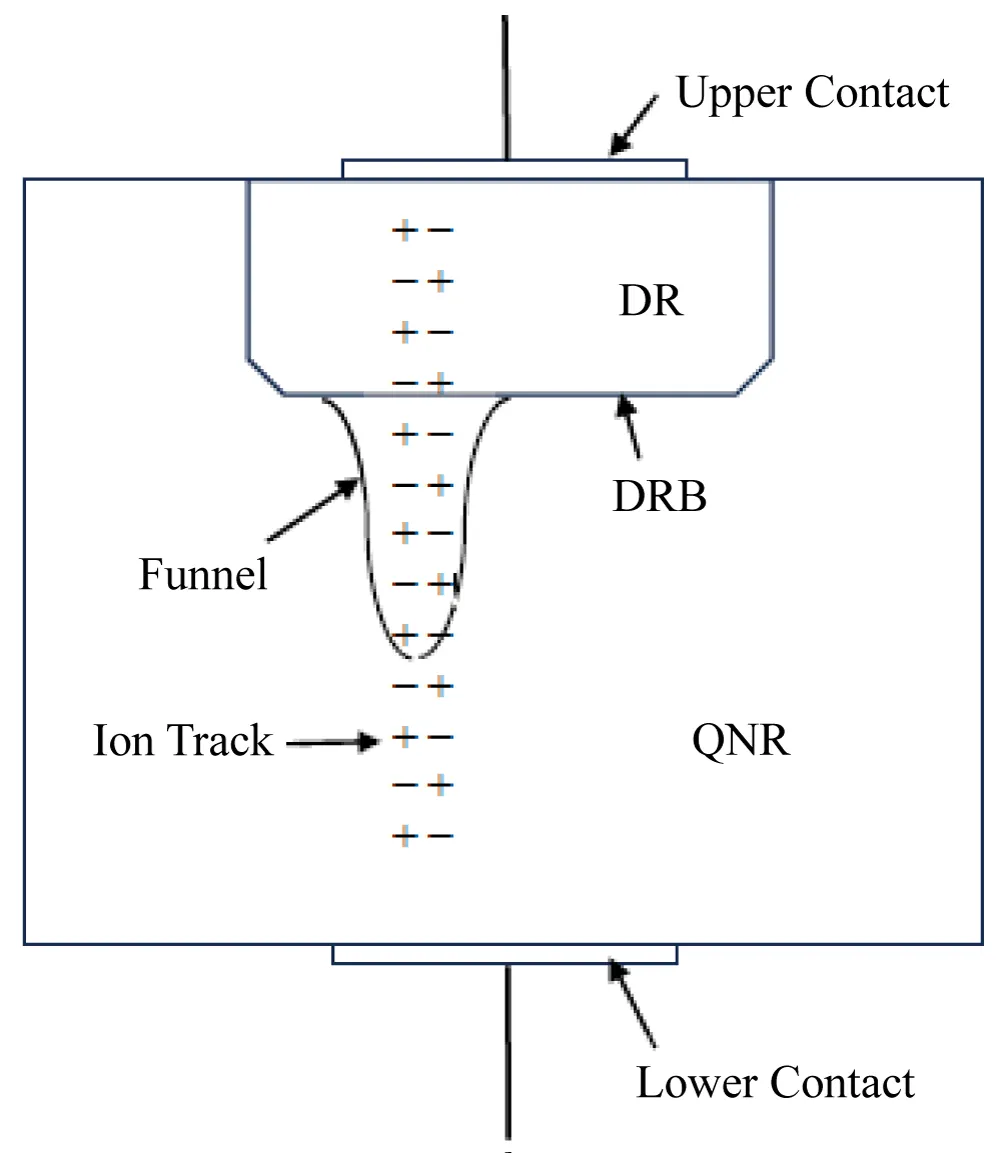
Figure 1: Illustration of a funnel extension of the DR.
Critique of the funnel concept
Unfortunately, the investigators who invented the funnel concept were unaware of the simple fact that the electric field is weakest, not strongest, at locations where the equipotential surfaces plotted in [2] are furthest apart. Inspection of plotted equipotential surfaces shows that instead of being strong-field drift regions, regions identified as funnels in the literature are the regions of the weakest electric field. The strong-field region is below the ion track, in the QNR, as seen in the plots in [2]. This could have been anticipated, even without looking at plots of equipotential surfaces, from the fact that the ion track is highly conductive1.
----------------------------------------------------------------------------------------------Regarding prompt charge, the concept of a prompt charge collection from a strong electric field is another myth. Not only is the so-called funnel a weak-field region in reality, but even the DR is nearly completely collapsed by a charge rearrangement2, so the DR after the ion hits, where the electric field remains strong, shrinks to a very narrow layer. The concept of a strong electric field over an extended spatial region attached to the p-n junction is a myth. Furthermore, the DR collapse is so complete during the earliest time regime that the p-n junction goes forward biased [3,4]3, producing a forward current that competes with the reverse current associated with the charge liberation. The result of this forward bias is that, during the very early stages of charge collection, the charge-collection rate is actually slower than it would be if charge-carrier transport were a pure diffusion process to a sink-like DRB [4].
----------------------------------------------------------------------------------------------It should be pointed out that if funnelling (a process) is defined to be the creation of an electric field in the QNR due to an ion hit to the DR, this is real, as explained in the next section. If funnel-assisted charge collection is defined to be the enhancement of collected charge due to the above electric field, this is real and can be calculated as described in the next section. The myth is the funnel (an object) when described as a strong-field drift region that promptly collects all charge contained within.
The correct view
A very rigorous mathematical analysis of the drift-diffusion equations produced conclusions discussed in this section. The above-mentioned analysis is rigorous only for a time regime that has been called “slow DR recovery” [3], but most charge collection occurs during this regime. Before discussing conclusions applicable to this time regime, a brief mention of prior time regimes is given. Considering the case in which an ion track goes directly through a reverse-biased DR, there are three relevant time regimes as follows.
The first time regime is called the “DR collapse” and consists of an extremely rapid rearrangement of charge carriers within the DR, with liberated carriers neutralizing most of the previously uncompensated doping ions inside the DR [3]. Charge collected during this time regime is completely negligible compared to what will be collected later, and the only significance of this time regime is to set up the initial conditions that the next time regime starts with [3]. This initial condition (even for ions as lightly ionizing as protons in a low- to moderate-voltage micro-electronic device) consists of almost none of the reverse biasing voltage at the device terminals being across the DR (it is across QNR instead), and the DR width being very small compared to the pre-ion-hit width. This state is the meaning of the statement that the DR is “collapsed”.
The second time regime that starts with the above initial condition is a transitional time regime that connects the end of the collapse stage to the start of the third time regime. The clearest explanation discusses the third time regime first and then the second time regime.
The third time regime was called “slow DR recovery” [3] and is characterized by the voltage across the DR and the DR width at a given point in time becoming insensitive to initial conditions (initial conditions are “forgotten”) and dependent only on the instantaneous (at the given point in time) distribution of currents and charge densities within the QNR. This is the only time regime that is analytically tractable, so, fortunately, most collected charge is during this time regime. Throughout this report, the analysis of the collected charge obtained by assuming conditions applicable to the slow recovery stage will be called the “analytical prediction” (explained in more detail later). Unfortunately, the collected charge during the second time regime is not completely negligible, so this time regime must be mentioned.
Returning to the second time regime, it was called the “fast partial DR recovery” [3], and is the transition between the end of the collapse stage and the start of the slow recovery. During the fast partial DR recovery, the voltage across the DR is rapidly changing with time, starting from nearly zero (the initial condition for this stage) to whatever value is dictated by conditions in the QNR at the start of the slow recovery. Also, the DR width is rapidly changing (i.e., the DRB is rapidly moving). Charge collection during this time regime has two complications. One complication, already mentioned in Section 3, is that the DR collapse is so complete at the start of the fast partial recovery that the p-n junction goes forward biased, producing a forward current that competes with the reverse current associated with the charge liberation [4]. This forward biasing makes the actual charge collection rate less than the analytical prediction mentioned in the previous paragraph and explained in more detail later. However, near the end of this stage, we have an enhancement of charge-collection rate due to a rapidly moving DRB that mimics a moving vacuum cleaner picking up diffusing particles faster than a stationary vacuum cleaner [4]. Fortunately, the two above-mentioned effects compete with each other in terms of accumulated charge at the end of the fast partial recovery, and the charge collected during the fast partial recovery is considerably less than the total collected charge. Therefore, the crude approximation of using the above-mentioned analytical prediction (discussed again below) for total collected charge, in spite of its derivation being based on conditions during slow DR recovery, gives good agreement with TCAD simulations [4-14] and with experimental data [14].
We now give a qualitative discussion of the analytical prediction. Quantitative details can be found in [14]. Contrary to an assertion that the analysis in [15] was based on, an electric current does not require a charge separation. There is a charge separation during the DR collapse (so a flow current at one location is a displacement current at another location), but this is a negligible contribution to the collected charge. Virtually all collected charge is via a flow current (as opposed to a displacement current) with electric charge leaving a volume element replaced by electric charge moving in to produce a continuous flow current from one device contact to another with no further charge separation, i.e., the QNR remains quasi-neutral4. Therefore, the analysis is an analysis of electric currents flowing through a QNR to a sink-like DRB.
----------------------------------------------------------------------------------------------The electric field in the QNR in the vicinity of the DRB is very weak, but the ion track is correspondingly highly conductive so that there is a significant drift contribution. Details of the analysis (not given here but can be found in either [3,14]) conclude that the drift contribution is a multiple of the diffusion current, so that the total current (drift plus diffusion) is calculated by multiplying the diffusion current by a factor determined by minority-carrier and majority-carrier diffusion coefficients. In this discussion, we will call this factor the “multiplying factor” and recognize that it is specified when the diffusion coefficients are given. With this multiplying factor known via known diffusion coefficients, the only thing needed to calculate the collected charge is a calculation of the diffusion contribution.
The remainder of this discussion is limited to high-injection conditions, which is the typical case when ionizing particles are heavy ions. The diffusion contribution to collected charge is then calculated from a carrier density that satisfies the ambipolar diffusion equation. However, this solution requires boundary conditions, and two cases are possible. In both cases, the DRB is regarded as a sink-like boundary. In one case, the ambipolar diffusion equation applies throughout the entire QNR, and the lower device contact is a sink boundary. Let Q* denote the collected charge calculated for this case with the multiplying factor included (a very simple algorithm for this calculation is explained in [14]). The second possible case is that in which the ambipolar diffusion equation applies only to the portion of the QNR that is above a boundary created within the QNR. The physical origin of this boundary is a strong electric field created below the ion track that prevents minority carriers from escaping downward and forcing all of them to be collected. If Qlib denotes the total amount of charge liberated by the ion track, then the collected charge for this case is Qlib. As explained in [3,14], an analytical prediction of which case applies is surprisingly simple. The first case applies if Q* ≤ Qlib and the collected charge is Q*. The second case applies if Q* > Qlib and the collected charge is Qlib. Both cases can be described by the single statement that the collected charge is the minimum of Q* and Qlib. This statement has been called the ADC (Ambipolar Diffusion with a Cutoff) charge-collection model [3,14].
The funnel concept was inspired by TCAD simulation plots of equipotential surfaces in a reverse-biased diode struck by an ionizing particle, together with the failure to recognize that the electric field is weakest, not strongest, at locations within the diode where the plotted surfaces are furthest apart. Weak-field regions are confused with strong-field regions, and there is no recognition of DR collapse. A more realistic charge-collection model, derived from a rigorous mathematical analysis of the drift-diffusion equations, was reviewed. This latter model gave good agreement with TCAD simulations [4-14] and with experimental data [14]. An algorithm for calculating the collected charge via this model is explained in [3,14].
- Petersen E. Single event effects in aerospace. Hoboken (NJ): IEEE Press; 2011. Available from: https://onlinelibrary.wiley.com/doi/book/10.1002/9781118084328
- Hsieh CM, Murley PC, O’Brien RR. A field-funneling effect on the collection of alpha-particle-generated carriers in silicon devices. IEEE Electron Device Lett. 1981;EDL-2(4):103-105. Available from: https://ieeexplore.ieee.org/document/1481841
- Singh J, editor. An introduction to charge carriers. Chapter 2. New York: Nova Science Publishers, Inc.; 2022. Available from: https://www.researchgate.net/publication/362027874
- Edmonds LD. A time-dependent charge-collection efficiency for diffusion. IEEE Trans Nucl Sci. 2001;48(5):1609-1622. Available from: https://doi.org/10.1109/23.960349
- Edmonds L. A theoretical analysis of steady-state photocurrents in simple silicon diodes. Pasadena (CA): Jet Propulsion Laboratory; 1995 Mar. JPL Publication 95-10. Available from: https://ntrs.nasa.gov/citations/19950024230
- Edmonds LD. A theoretical analysis of steady-state charge collection in simple diodes under high-injection conditions. IEEE Trans Nucl Sci. 2010;57(2):818-830. Available from: https://doi.org/10.1109/TNS.2009.2038914
- Edmonds LD. A proposed transient version of the ADC charge-collection model tested against TCAD. IEEE Trans Nucl Sci. 2011;58(1):296-304. Available from: https://doi.org/10.1109/TNS.2010.2087770
- Edmonds LD. A theoretical analysis of the role of ambipolar diffusion in charge-carrier transport in a quasi-neutral region under high injection. IEEE Trans Nucl Sci. 2011;58(5):2459-2469. Available from: https://doi.org/10.1109/TNS.2011.2161884
- Edmonds LD. Extension of the ADC charge-collection model to include multiple junctions. IEEE Trans Nucl Sci. 2011;58(6):3333-3342. Available from: https://doi.org/10.1109/TNS.2011.2168976
- Edmonds LD. Electric currents through ion tracks in silicon devices. IEEE Trans Nucl Sci. 1998;45(6):3153-3164. Available from: https://ieeexplore.ieee.org/document/736194
- Edmonds LD. Charge collection from ion tracks in simple EPI diodes. IEEE Trans Nucl Sci. 1997;44(3):1448-1463. Available from: https://ieeexplore.ieee.org/document/589631
- Edmonds L. Analytical solutions and approximations for the equation ydy/dx = (ay+b)h(x) with applications to drift-diffusion. Pasadena (CA): Jet Propulsion Laboratory; 2009. JPL Publication 09-13.
- Edmonds LD. High-level injection in n+-p junction silicon devices. J Appl Phys. 2005;97:124506. Available from: https://doi.org/10.1063/1.1940134
- Hooten NC, Edmonds LD, Bennett WG, Ahlbin JR, Dodds NA, Reed RA, Schrimpf RD, Weller RA. The significance of high-level carrier generation conditions for charge collection in irradiated devices. IEEE Trans Nucl Sci. 2012;59(6):2710-2721. Available from: https://ieeexplore.ieee.org/document/6365400
- McLean FB, Oldham TR. Charge funneling in N- and P-type Si substrates. IEEE Trans Nucl Sci. 1982;29(6):2017-2023. Available from: https://ieeexplore.ieee.org/document/4336489