
More Information
Submitted: September 26, 2026 | Accepted: September 29, 2026 | Published: September 30, 2026
Citation: Kouzalis A, Antoniou A. Relativistic Quantum Theory Extended to the Universe - The New Constant Hx and how it contributes to the Sun’s Charge. Int J Phys Res Appl. 2026; 9(9): 281-294. Available from:
https://dx.doi.org/10.29328/journal.ijpra.1001166
DOI: 10.29328/journal.ijpra.1001166
Copyright license: © 2026 Kouzalis A, et al. This is an open access article distributed under the Creative Commons Attribution License, which permits unrestricted use, distribution, and reproduction in any medium, provided the original work is properly cited.
Nomenclature: Photon mass; Cryogenic technologies; voulomb’s Law; Williams-type experiment; Johnson–Nyquist noise; Photon-mass constraints; Torsion-balance experiments; Fast radio bursts; Cryogenic instrumentation; Experimental physics

A Review of Recent Progress Concerning the Mass of Photons: Advancing Experimental Equipment via Cryogenic Technologies
Alexios Kouzalis1* and Antonios Antoniou2,3
1RUDN University, Moscow, Russian Federation
2European University Cyprus, Nicosia, Cyprus
3Minjiang University, Fuzhou, China
*Address for Correspondence: Alexios Kouzalis, Building 1, Bravo Shopping Mall, Xian, China, Email: [email protected]
A photon is the fundamental quantum of electromagnetic fields, which should have strictly zero mass according to Maxwell’s theory. However, not all theories adopt this assumption. It is hard for human intuition to accept the idea that matter in nature can consist solely of energy with no mass. Legendary physicists of the past, including de Broglie, Coulomb, and Schrödinger, were hesitant to accept the notion that photons lack mass. To this day, many physicists continue to attempt to determine the photon’s mass. In Tu and collaborators’ (2005) study, many of these efforts are documented, including attempts to set upper limits on the photon’s mass that systematically approach zero. The aim of this paper is to provide an overview of the theoretical and experimental developments concerning photon mass from the past to the present day. In continuation of Tu and collaborators’ (2005) study, we present the latest scientific updates on the photon mass. Our research indicates that, in contrast to advancements in theoretical and extraterrestrial approaches, there has been no experimental progress achieved on the subject in recent years. We believe that relying solely on theoretical research is insufficient; instead, it is crucial to use experimental techniques to empirically determine the photon mass. We recommend incorporating the latest technologies into existing experimental approaches, and specifically, we propose ways to improve the accuracy of the ‘tabletop’ experiment conducted by Williams and collaborators (1971), which aimed to detect the photon mass. Our suggestions are based on the latest advances in cryogenics and focus on modifying the equipment used in the current experiment.
Quantum electrodynamics’ ability to predict experiments to six or more decimal places has established the massless photon as a tacit axiom of physics [1]. This is evident because, as late as 1968, the Particle Data Group tables listed experimental limits on neutrino masses, whereas the photon was simply assigned a mass of zero. This speculation, however, has been and continues to be counterintuitive to many physicists across the centuries, including some of the most legendary. Let us briefly examine the experimental history related to the photon and its mass. The inverse-square force law was derived by Coulomb in 1785, using a torsion balance to measure the repulsive force between two charges of the same sign. Using this principle, Coulomb was the first known scientist to measure the photon’s mass experimentally [2]. Since then, detecting deviations from Coulomb’s law has been a fundamental principle in the design of experimental methods for detecting photon mass. So far, these methods have provided the most accurate limits. One of these methods, devised in 1773 by Cavendish, was shown to be more efficient than Coulomb’s [3]. The method involved setting up two concentric spheres connected through a wire. By charging the outer sphere and disconnecting the wire, the charge on the inner sphere could be measured, signifying a deviation. Since that time, experimental physicists have re-examined the subject, using Cavendish-type experiments to place even more precise limits on the photon’s mass.
One of the major achievements of classical physics was the development of the Maxwell electromagnetic field equations. A key prediction of these equations is that all electromagnetic radiation in a vacuum propagates at a constant speed c. One simple approach to setting a limit on the photon mass is to search for changes in c across the spectrum [1]. There are, however, more complicated but more efficient methods utilizing radiation. Moving on to the 20th century, the experimental quest to determine the photon mass began in 1901 with Planck’s formula for blackbody radiation and the introduction of what was later called the quantum of action [2]. Planck was the first to derive the spectral form of blackbody radiation. Planck’s original derivation used the relationship between the system’s entropy and the blackbody’s internal energy [4]. The physical principle underlying the phenomenon is the oscillation of the atomic nucleus. When the nucleus absorbs kinetic energy, its oscillation—including resonance—leads to the emission of orbital photons and the ejection of orbital electrons. The oscillation of the atomic nucleus alters its distance from the electron orbit, triggering the emission of negative photons and the generation of blackbody radiation [5]. The highest number of atoms deviating at a particular amplitude aligns with the peak wavelength of the blackbody spectrum, while the maximum deviation amplitude corresponds to the shortest wavelength. Blackbody radiation can also find applications in modern experimental physics. In high-precision optical lattice clocks, the influence of blackbody radiation constitutes a primary source of systematic error [6].
By the end of the 20th century, numerous scientists had undertaken efforts to determine the photon’s mass. Two review articles, one by Goldhaber & Nieto (1971) [1] and another by Tu and collaborators (2005) [3], summarized the approaches regarding a non-zero photon mass and discussed the observational and experimental limits pertaining to that mass. In this study, some of the latest updates concerning the photon and its mass are reported. Let us examine some recent scientific literature on the subject.
The ways electromagnetic radiation interacts with matter include the photoelectric effect, the Compton effect, pair production, and annihilation. Idrees and collaborators (2025)[7] showed that strong electromagnetic fields can manipulate and control the rotary photon drag in both left and right-circularly polarized beams, thanks to induced chirality. Smolyaninov (2024) [8] examined how the presence of a gravity gradient, simulated by an electromagnetic medium, leads to an effective photon mass in the Newtonian limit. It was found that in an optical anti-waveguide surrounding an unstable equilibrium position, the effective photon mass squared turned negative and seemed to be proportional to the local gravity gradient. Guimaraes and collaborators (2013) [9] introduced a consistent method to incorporate Dirac monopoles into Proca theory in (3+1) dimensions using the generalized Julia–Toulouse approach for the condensation of topological currents. It was demonstrated that massive photons can coexist with Dirac monopoles without inconsistency. This model of massive photons arises from the condensation of electric charges, and it shows that external magnetic monopoles are confined within monopole–antimonopole pairs. These pairs are connected not by Dirac strings but by physical Dirac brane invariants that represent open magnetic vortices. Hwang & Noh (2025) [10] explored massive-photon electrodynamics and magnetohydrodynamics within the curved spacetime of Einstein’s gravity by considering a Proca-type photon mass and formulating the equations using electric and magnetic fields along with the vector potential. Applying the post-Newtonian approximation, it was demonstrated that the dark Proca field acts as dust in the non-relativistic limit after the Klein transformation.
To understand the nature of reality, we typically use real numbers and consider imaginary numbers to explain some mysterious phenomena. In physics, complex numbers have been employed to describe real phenomena. Specifically, in quantum mechanics, complex numbers are crucial for depicting the behavior of subatomic particles. According to Goray & Annavarapu (2021) [11], the photon creates an illusion with its rest mass and conceals its energy simultaneously. Because the photon exhibits both wave and particle qualities, as a result, it exhibits different forms of mass, including zero rest mass, as well as real and imaginary rest masses [11]. Goray & Annavarapu (2021) [11] assert that the photon’s rest mass and energy are represented as complex numbers in relation to matter. Saleh (2023) compared [12] four real-world examples from different fields of physics and demonstrated that the mass-energy principle is violated when the photon’s rest mass is zero, thereby proving the necessity of a new theory to advance all areas of physics that deal with photons. In his recently developed theory, Saleh describes a photon as a minute particle with a constant rest mass [13]. According to Saleh theory, every mass is in fact the result of an aggregation of photons. The theory posits that the photon, being the smallest, fastest, and lightest particle in our universe, is also the primary building block of electrons, protons, and neutrons. From Saleh’s theory, it can be concluded that nuclear energy is defined based on this very photonic structure. Therefore, the famous equation E = mc2 can be rewritten as the sum of the energies of the individual photons that constitute the mass.
As mentioned earlier in this section of the study, Cavendish-type experiments were the most common types of laboratory experiments used by physicists to determine the photon mass. Some of the most accurate limits on the photon mass were obtained from these types of experiments. However, there is still room for improvement. In this study, we assert that by modifying the experimental apparatus through the incorporation of cryogenic technologies, the accuracy of the experimental results can be improved.
During the late 20th century, experimental physics experienced a gradual transition from room temperature to cryogenic conditions. For example, initially, resonant detectors operated at room temperature, but later transitioned to cryogenic versions such as Stanford, Explorer, and Nautilus. These cryogenic detectors achieved sensitivities capable of detecting gravitational waves resulting from the conversion of approximately 0.001 solar masses within the Galaxy [14]. This marked an energy sensitivity increase of several thousand times compared to early room temperature experiments. Over decades, this research laid the foundation for more advanced, highly sensitive detectors such as long-arm laser interferometers, which announced the first gravitational wave detection on February 12, 2016 [14]. Recently, Dutta and collaborators (2026) [15] introduced an innovative Technology Computer-Aided Design approach to recalibrate room-temperature process design kits for cryogenic use, relying on a small number of experimental measurements. This method adjusts Technology Computer-Aided Design models to match both room-temperature and cryogenic data, capturing process variations without specialized foundry support. As a versatile and scalable technique, it offers a practical solution for designing cryogenic circuits across different technologies.
Cryogenic system support structures are essential for ensuring mechanical stability while also limiting heat transfer into cold areas. Achieving a balance between these two needs is a key design challenge, especially at very low temperatures, where minimizing heat entry is vital for efficiency and performance. Material selection is crucial in solving this problem. Materials are selected for their high strength, stable behavior at cryogenic temperatures, and low thermal conductivity [16]. These traits provide an excellent strength-to-thermal-conductivity ratio, ideal for support applications in cryogenic systems. Typical strategies include reducing cross-sectional areas, extending thermal paths, and adding thermal intercepts to cut down heat transfer [16]. Thermal intercepts, in particular, have been shown to decrease thermal loads by up to 100 times when used effectively. Fluid materials such as liquid helium and liquid hydrogen are well known for their applications in cryogenics. Typically, they are used for cooling solid components. Liquid helium is primarily used to cool equipment, while liquid nitrogen is commonly used to cool high-temperature superconductors [17]. A study [18] introduced a novel surface strengthening technique for superalloys using cryogenic pretreatment. The process involved cooling the material to -196 °C for 3 to 6 hours. Results showed that this method significantly reduced surface roughness, encouraged grain refinement, and promoted the precipitation of strengthening phases. Additionally, it increased surface hardness and residual compressive stress while decreasing the high-temperature relaxation of residual stress. Consequently, cryogenic pretreatment demonstrates strong potential for practical engineering applications. Copper and its alloys are widely employed in power transmission, electronic communication, and mechanical manufacturing due to their excellent electrical and thermal conductivity. Manufacturing large quantities of high-strength, high-conductivity pure copper is especially crucial for the electronics industry. A recent study by Zheng and collaborators (2025) [19] proposed a composite thermomechanical processing technique combining the Equal Channel Angular Pressing-Conform (ECAP-C) process, cryogenic rolling, and recrystallization annealing to significantly increase the material’s strength while maintaining its outstanding electrical properties and conductivity.
Implications of photon mass
A key consequence of a nonzero photon rest mass is its impact on static magnetic fields, which notably differs from Maxwellian predictions on length scales beyond the photon’s Compton wavelength [3]. Photon masses are tested differently in the solar wind and via Fast Radio Bursts. Generalized Non-Linear Electro-Magnetism theories forecast a constant frequency shift resulting from the non-conservation of the energy-momentum tensor, which happens when the background varies with space-time [20]. Similar to other static shifts from massive photon, the Generalized Non-Linear Electro-Magnetism shift can be combined with the expansion shift, offering flexible options for analyzing astrophysical data or laboratory measurements [20].
The photon sphere can be used as a tool to classify different types of spacetime. Additionally, the effective potential and photon sphere are valuable for analyzing the initial conditions of black holes [21]. Gaussian black holes are a significant type of regular black holes, marked by their spherical symmetry and static configuration. Changes in a Gaussian black hole’s parameters can influence various observable features related to gravitational lensing [22]. Moreover, the frequency of photons influences the extent of gravitational deflection caused by plasma. In a uniform plasma medium, photons with lower frequency or longer wavelength are deflected more away from the gravitational center [23].
In gravitational lensing, light passes near the source where the gravitational field is very intense, causing substantial bending. This creates various possible paths for light to reach the observer, which can produce phenomena like shadows, photon rings, and relativistic images [24]. Light bending has theoretical significance, particularly in exploring the null structure of spacetime. Gravitational lenses can help to determine the mass of gravitational objects between an observer and their source [25]. The sun would not have been able to alter the photon’s course if it had no moving mass, and the moving mass of the photon makes it susceptible to the gravitational pull [26].
Quantum fluids of light are made up of photon ensembles that gain an effective mass due to spatial confinement or diffraction and experience binary interactions from the medium’s optical nonlinearity [27]. Their unique properties contrast with those of typical condensed matter systems. The phenomenology of soft-photon radiation is deeply connected to the issue of infrared divergences in Quantum Electrodynamics and the long-range characteristics of electromagnetic interactions, which stems from the photon’s zero mass mandated by the Abelian gauge symmetry [28]. Wong (2010) [29] developed a two-dimensional model featuring a gauge group and demonstrated that this model can be mapped onto a scalar quantum field theory that includes a massive photon. It was further suggested that the non-equilibrium dynamics within this framework could explain the production of anomalous soft photons. Direct photons can be produced as either real (massless) photons or virtual photons with non-zero mass. Detecting virtual direct photons allows for selecting a mass range which greatly improves the signal-to-background ratio compared to measurements of real direct photons [30].
A photon in a gradient-index fibre behaves as a massive particle, exhibiting an energy gap in its dispersion relation. Its energy spectrum can be modeled using the massive Schrödinger equation, which can be converted into the Klein-Gordon equation through a straightforward unitary transformation that accounts for energy shifts arising from condensation for lasing, along with the fibre confinement [31]. A recent study [32] explored how a finite photon mass can influence the axion-produced electromagnetic fields from localized currents, especially focusing on dipole radiation. The study examined the interaction between two very small parameters (the axion mass and the photon mass), considering how this might aid in future detection of cosmic axions or photon mass through electromagnetic interactions. The Proca theory was extended to include the axion field, and solutions to the modified electromagnetic equations were derived to first order in the axion coupling.
Methods to calculate the photon mass
Calculating the photon mass may not have direct implications for terrestrial physics; however, a massive photon can be a changing factor in astrophysics and cosmology. In the universe, strong magnetic fields significantly influence various phenomena. In rotating massive stars, these fields help drive magnetohydrodynamic core-collapse supernova explosions and contribute to the formation of magnetized neutron stars or black holes [33]. If the photon has a finite rest mass, magnetohydrodynamic phenomena in the interplanetary plasma—such as hydrodynamic wave interactions with the magnetic field—could provide useful ways to estimate that mass by examining its effects on the standard Maxwellian framework [3]. Moreover, the frequency dispersion of light velocity is the clearest evidence of a nonzero photon mass. Studying the invariance across the electromagnetic spectrum offers the most direct way to detect potential signs of a massive photon [3].
The kinetic energy of gamma photons can be calculated using conservation of energy and momentum. Experimentally, the rest mass energy can be determined through Compton scattering, utilizing a Thallium-activated Sodium Iodide gamma-ray spectrometer and Cesium as the gamma-ray source [34]. In addition to the gamma photon, the dark photon can also be massive. Cheng and collaborators (2022) [35] report two methods to generate its mass, leading to different phenomenological outcomes. One method is the “Higgs mechanism,” where mixing between the Higgs doublet and the Higgs singlet opens up the possibility of detecting dark photons through Higgs decays at particle colliders. The other is the “Stueckelberg mechanism,” which involves introducing an axionic scalar to confer mass. de Andrade (2023) [36], while working in parallel on photons and dark photons, augmented the Einstein–Cartan–Holst action, which violates parity, with an additional Proca photon–torsion coupling term H, thus making the calculation of photon mass feasible. It was concluded that the photon interacts very weakly with spin-torsion matter within Einstein–Cartan gravity, and the interaction strength of Maxwell–Proca–Holst is significantly less than in pure gravity. Additionally, if the photon has a non-zero rest mass, it would cause a time delay between photons of varying frequencies as they travel through a fixed distance [37]. By examining this time delay, we can estimate or limit the photon mass. Also in a Möbius helicoid model of a photon, as the number of windings per unit length increases, it signifies an increase in its mass within the matter realm [38].
This article presents a targeted narrative review following an explicit evidence-classification process, rather than a comprehensive systematic review or meta-analysis. The manuscript provided did not include a searchable screening log or a record of its original database searches; therefore, no retrospective coverage, screening counts, or independent reviewer procedures are claimed. For this revision, targeted web-index searches and source verifications were conducted using Scopus, Web of Science, the arXiv repository, American Physical Society journal pages, and IOP publication records. The update focused on photon-mass and cryogenic literature from 2021 to the present search date, while earlier foundational work was retained for historical and methodological context. Search queries included “photon mass” in combination with “Coulomb null test,” “Williams Faller Hill,” “torsion balance,” “fast radio bursts,” “cryogenic,” and “Johnson Nyquist noise”; exact article titles and author names were used to resolve individual citations. These searches were supplemented by references already cited in the manuscript. Relevant recent sources were checked against the reported mass, units, confidence statements, and physical interpretations. Eligibility required a direct connection to vacuum photon-mass theory or constraints, or a clear engineering link to cryogenic null measurements. Primary measurement papers and established reviews were prioritized for quantitative bounds. Effective masses, speculative theoretical scales, and other-particle studies were included only in separately identified contextual categories. Irrelevant mass claims, duplicate table entries, and unsupported numerical interpretations were excluded from the quantitative comparison. Reliability was assessed qualitatively based on the measured parameters, the theoretical model, calibration and systematic uncertainties when available, the confidence level, environmental or cosmological assumptions, and published criticisms. No formal risk-of-bias score or pooled bound was calculated. Limitations such as selective retrieval and incomplete full-text access restrict the review’s completeness; the absence of a study does not imply it does not exist.
Theoretical approaches
Maxwell described light as a wave propagating through coupled electric and magnetic fields. More broadly, he predicted electromagnetic radiation: intertwined electric and magnetic fields traveling as waves at the known speed of light [2]. To apply Maxwell’s equations and Compton scattering theory, the modification shows that the photon’s rest mass is approximately 10-49 g. According to Sanad (2023) [39], the photon mass, as a particle, can be determined by its key physical properties—energy, wavelength, and velocity. The measured photon mass is 2.2 x 10⁻³⁴ kg or 2.2 x 10⁻³¹ g, which is consistent across all types of electromagnetic radiation, from gamma rays to radio waves. Particle and antiparticle masses can differ, leading to the violation of the fundamental symmetry of charge, parity, and time. Fundamentally, the increase in electron mass is expected to influence the overall quantum efficiency of emission, the spectra of photoemission quantum yield, and the energy and angular distributions of emitted electrons [40]. Additionally, the mass difference between the electron and positron allows us to set an upper limit on the photon mass: m ~ 2.5 x 10⁻¹⁸ eV or 4.46 x 10-51 g [41]. Typically, the photon is known to display properties characterized by wave-particle duality. In an effort to resolve this controversy, Antoniou & Kouzalis (2026) [42] combined the wave and particle theories of light into a single equation. This unification led to the determination of the upper limit of photon mass, which was found to be m < 1.24MeV / c2 or m < 2.21 x 10⁻²⁷ g.
In Table 1, values of photon masses calculated using the most recently developed theoretical approaches are reported. Table 1 distinguishes between theory-dependent estimates and empirical bounds. Throughout, mass conversions use the factors 1 eV/c² = 1.78266192 × 10⁻³⁶ kg and 1 g = 10⁻³ kg. An energy value expressed in eV is interpreted as a rest-mass energy only if explicitly specified by the source. Confidence levels are retained as reported and are not harmonized across studies. None of the theoretical entries in Table 1 have an experimentally confirmed detection significance. The original manuscript’s conversion for Antoniou and Kouzalis (2026) [42] is preserved, although its interpretation is qualified: 1.24 MeV/c² equates to 2.21 × 10⁻³⁰ kg or 2.21 × 10⁻²⁷ g. This value is substantially larger than the benchmark by Williams et al. [43], and thus does not provide a competitive photon-mass constraint. It reflects a theoretical consistency argument within the authors’ framework, not an experimental measurement. The same applies to other theoretical estimates.
| Table 1: Values of photon masses calculated using the most recently developed theoretical approaches. | |||
| Literature Source | Type of method used | Interpretation | Photon mass |
| Al Ata Ahmed Salih et al (2021) | Integration of Maxwell's and Compton's theories and equations | Not treated as a calibrated experimental upper bound. | ~10-49 g |
| Sanad (2023) | Derivation from photon’s key physical properties (energy, wavelength, and velocity) | Proposed value, not an experimental limit or detection. | 2.2 x 10⁻³¹ g |
| Jafari & Shukirgaliyev (2024) | Mass difference between the electron and the positron | Modified-relativity theoretical model context | m ~ 4.46 x 10-51 g |
| Antoniou & Kouzalis (2026) | Integration of the principles of wave and particle theories of light. | Model dependent theoretical upper value | m ~ 2.21 x 10⁻²⁷ g |
Extra-terrestrial approaches
De Broglie (1940) [44] proposed that observing the dispersion of radiation from rapidly fluctuating astronomical objects—such as eclipsing binary stars, pulsars, supernovae, or quasars—could reveal information about the photon rest mass. In particular, he indicated that a limit on photon mass might be established by analyzing light from a star emerging from behind its dark binary companion, and he found this limit to be m = 8 x 10-40 g. Schrödinger (1943) [45] introduced a method to estimate the photon rest mass and established an upper limit of approximately m = 2 x 10-47 g. This was achieved by analyzing the Earth’s magnetic field and modifying Maxwell’s equations, particularly Ampere’s law. Schrodinger described the external field as the component that Maxwell’s theory attributes to external sources. Drawing from his unified field theory, Schrodinger suggested that a finite photon rest mass could account for the presence of both the ‘external field’ and the ‘non-potential field‘. By analyzing satellite data at various altitudes, it is possible to estimate the photon rest mass through observing the exponential decay of the geomagnetic field. The initial limit derived using this approach was established by Gintsburg (1963) [46], setting m < 3 x 10-48 g. Gravitational lensing happens when light rays are bent as photons pass near a massive, compact object, causing a visible deflection commonly called a gravitational lens [47]. Lowenthal (1973) [48] introduced a method to establish bounds on the photon mass by examining how electromagnetic radiation is deflected by gravity. It was determined that for visible light, the photon mass m < 1 x 10-33 g.
In this paragraph, the most recently developed extraterrestrial methods are described. Fast radio bursts —transient radio bursts characterized by millisecond duration and cosmological propagation—are excellent astrophysical laboratories to constrain the photon mass. A recent study [37] used a catalog of 129 Fast Radio Bursts within a Bayesian framework to constrain the photon mass. This led to a new upper limit of m ≤ 3.1 x 10-51 Kg at 68% confidence, and m ≤ 3.9 x 10-51 Kg or 3.9 x 10-48 g at 95% confidence. This is the most stringent limit based solely on the kinematic analysis of light propagation. The bound on the photon mass is expected to become even tighter soon, thanks to an increase in the number of observed fast radio bursts, more precise redshift measurements, and a better understanding of the sources of dispersion measures. In the standard Lambda Cold Dark Matter model (a model of the Big Bang theory), if the Kaup mass is equated with the total mass of the universe, a corresponding particle mass is derived m = 3.71 x 10-66 g [49]. Some authors [50] view the above mass as the upper limit (maximum possible) mass of the photon. The detection of ultra-high-energy photons reaching Earth by terrestrial observatories calls for a better understanding of the physics involved. These events could indicate physics beyond the standard model of particle physics. Ismail and collaborators (2025) [51] introduced a novel idea involving photon-dark photon conversion via extra dimensions to explain these phenomena. If dark photons exist in higher-dimensional space, the probability of photon-dark photon conversion could be resonantly enhanced, allowing a gamma-ray burst to be observed on Earth. Since electron density is higher within the Milky Way disk, the effective photon mass m2 is approximately 4.1 x 10⁻¹² eV or m ~ 3.56 x 10-39 g.
Table 2 reports both historical and recent estimates of the photon mass derived via extraterrestrial methodologies. Historical bounds derived from stellar dispersion, geomagnetic fields, and gravitational deflection examine different observables and rely on varying assumptions. These are summarized in Table 2 as a historical overview rather than as equally robust present-day constraints. The 2021 Fast Radio Burst limit is not presented here as the most stringent universal propagation constraint, given that sample selection and inference assumptions differ between analyses. Recent localized samples and alternative reconstructions help address some uncertainties.
| Table 2: Historical and most recent values of the photon mass derived via extraterrestrial methodologies. | |||
Literature Source |
Type of method used | Interpretation | Photon mass |
De Broglie (1940) |
Dispersion of starlight |
Historical value as summarized in the manuscript; no modern statistical confidence level specified. | m < 8 x 10-40 g |
Schrödinger (1943) |
Earth’s magnetic field | Historical model-dependent bound; field/source assumptions. | m < 2 x 10-47 g |
Gintsburg (1963) |
Altitude-dependence of massive photon geomagnetic fields | Historical value; depends on geomagnetic modeling; confidence not specified here. | m < 3 x 10-48 g |
Lowenthal (1973) |
Gravitational deflection of massive photons | Weak historical bound; gravitational propagation interpretation. |
m < 1 x 10-33 g |
Wang et al. (2021) |
Fast radio bursts | 68% and 95%, respectively; dispersion decomposition, redshift and cosmological assumptions. | m £ 3.9 x 10-48 g |
Chavanis (2024) |
Lambda Cold Dark Matter model | Cosmological model mass scale | m £ 3.71 x 10-66 g |
Ismail et al. (2025) |
Photon-dark photon conversion via extra dimensions | Novel model incorporating gamma-ray bursts and electron density | m £ 3.56 x 10-39 g |
Terrestrial (laboratory) experiments
Laboratory methods for detecting deviations from Coulomb’s inverse square law have established the most accurate limits on the photon mass. The main benefit of these approaches is that each parameter can be tested and adjusted independently, unlike astronomical methods, which often rely on multiple factors that depend on assumptions and interpretations hard to verify [3]. The Coulomb null experiment aims to detect sub-nanovolt signals that would escape a closed shell if the photon had a positive mass. This method enables researchers to establish strict upper limits on the photon mass. Coulomb experiment’s estimate on the photon mass is approximately 10-44 g [2]. In 1971, Franken and Ampulski [52] suggested a experiment using very low-frequency parallel resonance circuits to establish an upper limit on the photon rest mass [3]. Measurements taken from a circuit operating at approximately 1 rad s−1 yielded a result of m < 10-49 g. In the same year, Williams and collaborators (1971) [43] conducted a high-frequency test of Coulomb’s law by conducting a Cavendish-type experiment. The experiment’s sensitivity was expressed in terms of a finite photon rest mass, utilizing the Proca equations. The result of the measurement, expressed in the form of the photon rest mass, was m < 1.6 x 10-47 g. This finding broadens the applicability of Coulomb’s law by two orders of magnitude. At the closing edge of the 20th century, Lakes (1998) [53] described an experimental method using a modified Cavendish balance to measure the product of photon mass squared and the ambient cosmic magnetic vector potential. The core concept was to produce a magnetic-dipole vector-potential moment using a suspended toroidal coil. The experiment conducted indicates the values of Aµ2 < 2 x 10⁻⁹ Tm/m3. By assuming an ambient magnetic vector potential A = 1012 Tm, Professor Lakes found the characteristic length to be µ-1 > 2 x 10¹⁰ m. Based on these data, he calculated the upper limit of the photon mass to be 2 x 10-50 g. In Table 3, values of the photon mass determined via experiment are reported. In contrast to advancements in theoretical and extraterrestrial approaches, there was limited experimental progress achieved during the 21st century. Antoniou & Kouzallis (2026) [42] emphasize the necessity for additional laboratory experiments to determine the photon mass. Specifically, they suggest utilizing Max Planck’s blackbody radiation Law to draw experimental results.
| Table 3: Values of the photon mass determined experimentally. | |||
| Literature Source | Type of method used | Interpretation | Photon mass |
| Al Ata Ahmed Salih et al (2021) | Coulomb’s experiment | Reported in the supplied manuscript | m ~ 10-44 g |
| Franken & Ampulski (1971) | Parallel resonance circuits method | Low-frequency circuit interpretation | m < 10-49 g |
| Williams et al. (1971) | Cavendish type experiment | Controlled electrostatic null test | m < 1.6 x 10-47 g |
| Lakes (1998) | Torsion balance methods | Not an independent environment-free mass limit | m < 2 x 10-55 g |
Williams et al. (1971) [43] establish the benchmark for electrostatic design. While a laboratory setting provides experimental control, it does not necessarily guarantee a numerically stronger bound than all astrophysical methods. Reproducing and substantially improving a controlled, Williams-type electrostatic bound remains technically challenging. Factors such as quadratic mass sensitivity, excitation leakage, capacitive imbalance, surface potentials, dielectric losses, and geometry-dependent calibration can all limit the effectiveness of electrostatic null tests. Torsion measurements also face additional uncertainties related to magnetic fields and vector potentials. The numerical improvements gained with one observable cannot be directly applied to other experimental regimes.
Exotic particles
Since the advent of particle accelerators, particle physics has advanced significantly. In this subsection of the study, we report the most recent mass values determined for exotic particles. These values can be used as a basis for comparison with the mass of a photon. New physics phenomena, necessary to explain neutrino oscillations, dark matter, baryon asymmetry, inflation, and other phenomena, might occur at very low energy scales. These would involve only very weak interactions with known Standard Model particles. Phenomena including anomalies in the muon measurements and rare decays of kaons and B mesons that need further verification, are only detectable with light dark photons weighing less than 10 GeV [54]. A recent study [36] investigating the dynamo mechanism and dissipation caused by the magnetic field’s handedness relative to the torsion trace vector asserted that the dark photon mass can reach up to 1.5 GeV or m < 2.67 x 10⁻²⁴ g. In addition, photons and gravitons are the only known free particles that can have exactly zero rest mass. The key scientific question in gravity related to photon mass concerns whether gravitons possess mass. Very Special Linear Gravity is an alternative approach to linearized gravity that includes massive gravitons while maintaining only two physical degrees of freedom. Through this approach, Bonilla and collaborators (2025) [55] have estimated the upper limit of the graviton mass to be 10 x 10-19 eV/c2 or 1.78 x 10-51 g. In search of other possible exotic particles. Gorbunov & Kalashnikov (2024) [56] investigated models involving hypothetical light vectors (hidden photons) and axion-like particles, both capable of directly interacting with photons. These particles can travel long distances before decaying into detectable particles. Axion-like particles span a wide range of masses and couplings, making them promising targets for both astronomical and laboratory searches. The kinematic analysis of the study indicates that the Nuclotron-based Ion Collider facility can explore new parameter space regions for models involving hidden vectors and axion-like particles with masses around 30-500 MeV or m < 8.91 x 10(-25) g (upper limit). Furthermore, when the axion mass drops below the μeV scale, the primary investigations come from high-energy astrophysics: axions produced in stars or supernovae can convert into X- and γ-rays within galactic magnetic fields. Bondarenko and collaborators (2023) [57], proposed a conversion method applicable to any small axion mass, utilizing the energy-dependent negative contribution of the radiation field to the effective photon mass, known as the ‘double lens effect. This technique decouples the axion mass from the resonant electron density and places the resonance radius near reported constraints on the photon-to-axion-like particle coupling.The 95% confidence level limit applies for axion-like particle masses approximately between 5. 0 x 10-10 eV < m < 1.0 x 10⁻⁷ eV or m < 8.9 x 10-43 g or (upper limit). Markarian 421 is a well-known nearby BL Lac blazar. It sets a 99% confidence level upper limit on the axion mass, in the range of 1.0 x 10⁻⁹ eV ≲ 𝑚𝑎 ≲ 1. 0 x 10-8 eV or m < 1.78 x 10--42 g (upper limit) [58]. In Table 4, the most recently determined values of mass of selected exotic particles are reportedthe neutron star surface, greatly enhancing conversion probability. Li and collaborators (2024a) [59].
| Table 4: Values of photon masses calculated using the most recently developed theoretical approaches. | ||||
| Literature Source | Type of particle | Type of method used | Interpretation | Photon mass |
| de Andrade (2023) | Dark photon | Magnetic field's handedness | Model-dependent field construction | m < 2.67 x 10⁻²⁴ g |
| Gorbunov & Kalashnikov (2024) | Hidden photos and axion-like particles | Kinematic analysis estimates of NICA sensitivity to Standard Model extensions | Projected search sensitivity in mass–coupling space | m < 8.91 x 10⁻²⁵ g |
| Li et al. (2024a) | Axion-like particles | Photon to axion-like particle coupling | Source-dependent coupling exclusions across mass ranges | m < 8.9 x 10-43 g |
| Li et al. (2024b) | Axion | BL Lac blazar | Source-dependent coupling exclusions across mass ranges | m < 8.78 x 10--42 g |
| Bonilla et al. (2025) | Graviton | Very Special Linear Gravity model | Constraint within VSL-Gravity; gravitational-sector result | m < 1.78 x 10-51 g |
Cavendish-type laboratory experiments
According to Tu and collaborators (2005) [3], the Cavendish type experiment conducted by Williams and collaborators (1971)[43] sets the best laboratory limit m < 1.6 x 10-47 g on the photon rest mass. However, because of the sensitivity of such experiments, a hundredfold improvement in the signal-to-noise ratio is necessary to enhance the photon mass limit by a factor of 10. Achieving this will be challenging, but significant progress might be possible with advancements in experimental techniques. There are three main ways to enhance the experiment [3]: using a larger apparatus, increasing the applied alternating voltage, and detecting even smaller potential differences. Improving the Cavendish method’s accuracy mainly depends on reducing the noise voltage [60,61], allowing detection of smaller potential differences. The most promising strategy involves cryogenic techniques to lower the apparatus temperature to a few millikelvin. Figure 1 illustrates the experimental apparatus employed by Williams and collaborators in their experiment. In the following subsections of the paper, the most recent advancements in cryogenic techniques are reported that can aid in modifying the experimental apparatus depicted in Figure 1.
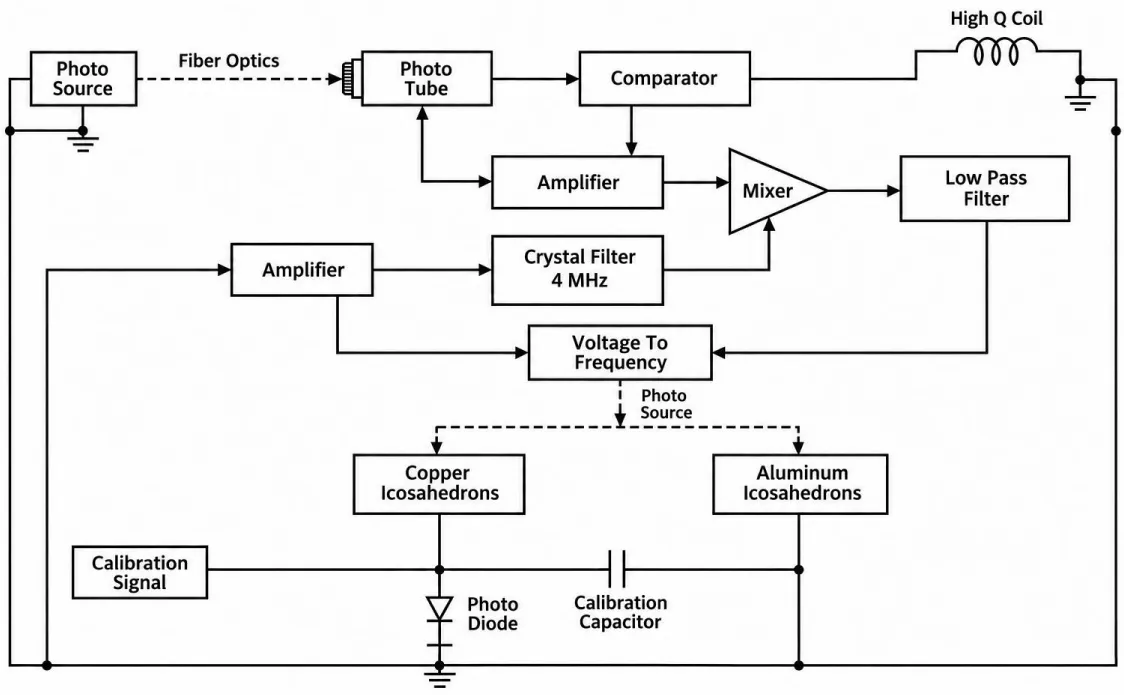
Figure 1: The experimental apparatus employed by Williams and collaborators.
Modifications on material used in cryogenic applications
Cryogenic quenching is essential for cryogenic systems before they start operation. Despite its significance, there is considerable potential to improve the efficiency of cryogenic quenching across different applications. One research study [62], explored how heat transfer is enhanced during cooling on aluminum surfaces through nanoscale boehmite structures. Findings indicated that, in pipeline quenching, the required time is shortened to 60% to 85% of that for plain aluminum alloys, depending on Reynolds numbers, with notable improvements in cooling efficiency at low Reynolds numbers.
Device leakage and wire resistance can be greatly decreased by cooling the circuitry of an apparatus to cryogenic temperatures, which would further enhance performance and energy efficiency [63]. In a recent study [64], a cryogenic environment was innovatively integrated into a continuous multi-pass drawing process that involved over one hundred passes. This introduced a shift in the main deformation mechanism of the wire material from slip-dominated to slip-twinning coordinated deformation. Consequently, nanotwinned structures were successfully embedded into ultrafine wires, overcoming previous performance limitations. Nanotwins and dislocations work together to strengthen the material during cryogenic drawing and offers a scalable, ongoing method for manufacturing high-performance conductive materials within strict size constraints [64].
In ultra-low temperature superconducting electronics, leak-tight cells and capillary condensation lines are essential for experiments involving electrons and ions on cryogenic substrates, and the electron source typically used is a tungsten filament. Uvin and collaborators (2026) [65] suggested a twofold application of a helical tungsten filament. Using the helix tungsten filament both as a vacuum monitor and electron source can enhance experimental efficiency by ensuring vacuum quality and surface purity on cryogenic substrates.
Fundamental components of electronic circuits (amplifiers, inductors, comparators, calibrators)
Modern electronic circuits can achieve high-performance and accurate measurements by reducing noise. One study [66] presented a cryogenic low-noise amplifier that utilizes a 150 nm gallium arsenide pseudomorphic high electron mobility transistor process and features a three-stage cascaded design. The initial stage focuses on precise impedance matching to enhance noise performance and return loss. Operating at 3.6 K with a power consumption of 15 mW, it delivers strong performance, achieving a minimum noise temperature of 4 K and an average gain of 40 dB. Furthermore, Liang (2024) [67] proposes a transimpedance amplifier design for a cryogenic scanning tunneling microscope. Utilizing the proposed component, the microscope will be able to measure scanning tunneling shot noise spectra at the atomic level for different quantum systems, even when shot noise levels are very low.
Among passive components, inductors are essential for designing low-noise amplifiers, such as those used in qubit read-out circuits. Characterizing the radio frequency performance of both passive and active components is a crucial first step in developing radio frequency circuits optimized for cryogenic complementary metal-oxide-semiconductor applications. One study [68] examined the radio frequency performance of inductors at cryogenic temperatures and found that the quality factor of the inductor doubled at low temperatures due to decreased metal resistivity, which aligns qualitatively with direct current measurement.
Dynamic comparators, also known as regenerative comparators, form the essential core block in analog-to-digital converters and determine their overall performance. For applications such as particle experiments, analog-to-digital converters need to operate at high speed, with low power consumption, and across a wide temperature range. Pai and collaborators (2024a) [69] introduced a high-speed, low-power cryogenic comparator designed for analog-to-digital converters. The pre-amplifier employs a dynamic bias technique to reduce power usage. To boost the output voltage difference of the pre-amplifier, a latch is integrated. This latch maintains a cross-coupled inverter to ensure strong positive feedback. Its tail current source is replaced by the input pair to minimize through current, while an auxiliary input pair improves gain and positive feedback, accelerating the latch. Furthermore, quantum processors function within a cryogenic environment. Cryogenic complementary metal-oxide-semiconductor circuits are gaining significant interest as essential components for developing practical quantum computers. One such circuit incorporates a common-mode variation suppression switching scheme and a gain-boosting dynamic comparator [70]. This design enhances accuracy and allows the comparator to operate at peak performance. The proposed comparator uses a gain-boosting dynamic capacitive pre-amplifier to improve amplification and speed up the comparison process.
Calibrating cryogenic calorimeters, particularly those sensitive to energies of just a few tens of eV, has historically been challenging. LANTERN—a system using optical calibration—can precisely examine the region of interest of cryogenic detectors by employing LED pulses to produce photon signals for detector calibration [71]. LANTERN leverages the statistical data generated by multiple photons absorbed simultaneously in a single calorimeter to analyze the detector’s response characteristics.
Crystal filter
The development of advanced optical devices has been fueled by the demand for high-performance sensors, reflectors, and filters used in various technological fields, including precision sensing. Cryogenic environments are defined by their extremely low temperatures, typically below −153 ℃ (120 K). These conditions pose challenges for piezoelectric materials, as most tend to lose much of their piezoelectricity at low temperatures. However, recent findings show that certain types, like relaxor-PT single crystals, can still retain relatively high piezoelectric properties in cryogenic settings. Naderi and collaborators (2025) [72] examined how cryogenic temperatures affect piezoelectric materials and explored various methods—such as doping, altering material composition, and engineering defects—to adapt these materials for effective performance at low temperatures. Furthermore, Bhardwaj and collaborators (2026) [73] explored the design and optical characteristics of one-dimensional ceramic photonic crystal heterostructures that incorporate superconducting thin film defects for cryogenic applications. By embedding yttrium barium copper oxide within a photonic crystal structure made of bismuth germanate and silicon dioxide, the study showed temperature-dependent tunable optical responses. These structures serve as highly sensitive cryogenic temperature sensors and also function as broadband reflectors, polarization filters, and multi-channel optical filters. Overall, these results underscore the potential of superconducting photonic crystals for advancing cryogenic optical technologies.
Fibre optics
Precise measurement of cryogenic temperature is essential for many scientific and technological fields. Fiber-optic sensing technologies are widely used in cryogenic environments for this purpose. A fiber optic Sagnac interferometer-based sensor was developed and tested experimentally [74]. Results showed that this sensor has an average sensitivity of 1.8 nm/K across a broad temperature range of 170–320 K. Its high sensitivity, minimal hysteresis, and straightforward fabrication make this sensor an excellent choice for cryogenic temperature detection. Concerning light detection and handling, single photons are fundamental building blocks in photonic sensing, and communication. There is a need to develop practical methods for tuning, guiding, and coupling single photons within photonic circuits for real-world applications. The efficiency of coupling single photons into optical fibers remains a technical challenge in quantum optics and requires innovative design and materials. Riyazi and collaborators (2025) [75] proposed a fiber-based micro-photonic design for direct coupling of emitted single photons into the core of a single mode fiber. Results showed that optimizing the thickness of a tantalum layer, a novel plasmonic material, maximizes coupling efficiency in the fiber optic communication band (λ ∼ 1550 nm). This approach offers a promising strategy for single photon manipulation across various quantum optics applications.
Photon tube
A calcium fluoride crystal, characterized by its broad 12 eV band gap, is considered a promising material for developing a solid-state nuclear clock. However, the process of isomer production involves excitation light that can cause permanent damage to the crystal, reducing its ability to transmit signal photons [76]. To mitigate this damage, cooling the crystals to cryogenic temperatures has been proposed which may also enhance the future precision of solid-state clocks. Guan et al. (2025) [76] introduced a cooling method that employs a copper shield surrounding the crystal, functioning as a cold trap. This setup prevents ice-layer formation at cryogenic temperatures, thereby maintaining high efficiency in detecting vacuum ultraviolet photons. Furthermore, detecting scintillation light in liquid argon time projection chambers is challenging due to its short wavelength in the vacuum ultraviolet range and the cryogenic temperatures of 86 K at which the sensors operate [77]. Wavelength shifters are commonly used to leverage the high photon detection efficiency of photodetectors in the visible spectrum. Silicon photomultipliers (such as i.e the Hamamatsu VUV4) directly detect vacuum ultraviolet light without wavelength shifters , offering the main advantage of higher photon detection efficiency at these short wavelengths, along with improved detection of the visible light produced by wavelength shifters [77]. In addition, a diffraction-limited synchrotron light source with a 6 GeV electron beam and 200 mA current is being designed and constructed by the Institute of High Energy Physics at the Chinese Academy of Sciences since June 2019 [78]. The device features a 166.6 MHz cavity cryomodule. The cryomodule’s thermal performance has been evaluated via Finite Element Method simulations, while experimental tests—including cooldown procedures, radio frequency power operation, and heat load measurements—have been conducted within a liquid helium cryogenic system [78].
Proposed cryogenic configuration
The proposed setup adheres to the principle of a Williams-type electrostatic null test: an alternating voltage energizes the outer electrode system, and a differential measurement detects any residual signal within the nested conducting shells. Williams et al. (1971) [43] employed a high-frequency Coulomb-law test, interpreted through the Proca equations. Tu et al. (2005) [3] describe a configuration involving five concentric icosahedral shells, with a 4 MHz excitation at approximately 10 kV peak-to-peak and a resonant drive using a water-cooled high-Q coil. These historical features serve as a benchmark rather than a comprehensive specification for the proposed apparatus.
Figure 2 presents a new functional layout for the cryogenic setup. The nested electrodes and carefully selected low-noise input components are housed within an evacuated, electromagnetically shielded cryostat. To minimize heat dissipation, the source, resonant drive, and acquisition system are kept outside the cold region. An isolated optical output reduces conductive interference across the measurement boundary; however, its transmitter and receiver noise, power dissipation, and residual coupling still need to be characterized. The rectangles shown represent nested conductors, not their physical shapes. For simplicity, electrical return conductors, guard potentials, and detailed internal-shell connections are not shown here and must be defined during circuit design.
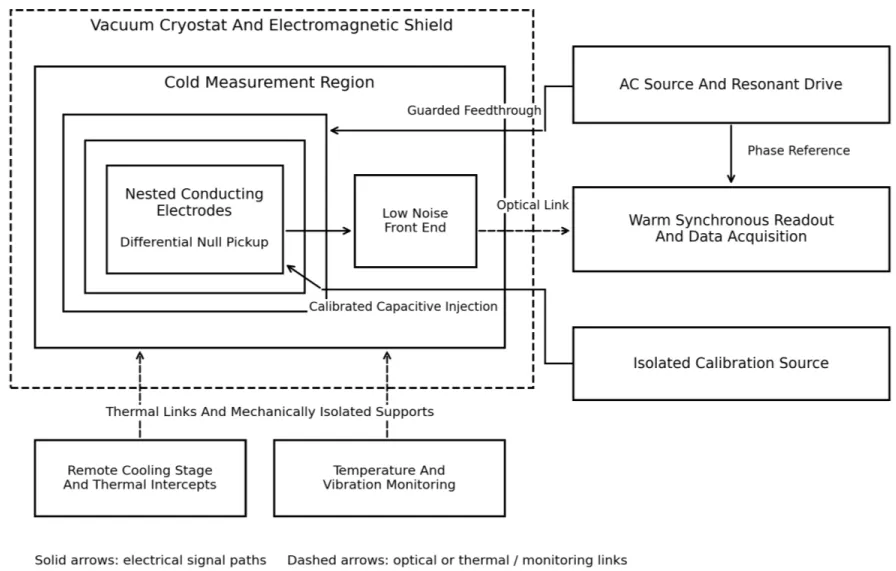
Figure 2: Proposed functional schematic of a cryogenic Williams-type electrostatic null experiment. The cryostat encloses the cold electrodes and candidate front end; the excitation source and synchronous readout remain warm. The calibration input, optical link, thermal controls and vibration monitoring are proposed additions.
Temperature sensors, thermal intercepts, and mechanically isolated supports are included to help monitor and regulate the cryogenic environment. A remote cooling stage helps reduce direct vibration transmission, though it doesn’t completely eliminate it. A calibrated capacitive injection path allows measurement of the transfer function and phase response at each operating temperature. It’s important to verify its isolation, parasitic coupling, and thermal load. To suppress excitation leakage, separate drive and pickup feedthroughs, guarded cabling, and careful control of grounding and shielding are required. The cold front end should only be used if its input-referred noise and dissipation are better than those of a warm or intermediate-temperature alternative. Initially, the geometry, voltage amplitude, and effective detection bandwidth should be kept constant to understand how temperature affects them. The cold dimensions, dielectric properties, and calibration capacitance must be measured directly, rather than assumed to stay the same.
A tenfold increase in the mass limit would require roughly a hundredfold reduction in the relevant voltage threshold, assuming all other parameters remain constant. Acceptance depends on a calibrated input-referred uncertainty budget. Likewise, the product of measured displacement-to-voltage coupling and vibration amplitude must stay below its designated noise contribution. These relationships establish testable shielding and vibration requirements; numerical attenuation and displacement specifications cannot be fixed until the coupling coefficients are determined. Prior to claiming an improved bound, temperature sweeps, calibrated signal injection, phase controls, repeated thermal cycles, and independent replication should be conducted. An apparatus comparison is provided in Table 5. Historical specifications are distinguished from proposed design choices and conditional calculations. Thermal noise is not equivalent to the achieved null-signal threshold. The references Williams et al. (1971) and Tu et al. (2005) [3,43] remain the primary sources for the historical benchmark.
| Table 5: Apparatus comparison. | ||
| Feature | Williams et al. (1971) apparatus | Proposed cryogenic modification |
| Measurement principle | High-frequency Coulomb null test interpreted using Proca theory. | Same null observable; temperature-dependent response must be calibrated. |
| Electrode system | Five nested conducting icosahedral shells, as summarized by Tu et al. (2005). | Nested conducting shells in a vacuum cryostat; geometry and cold dimensions to be specified. |
| Excitation | Approximately 10 kV peak-to-peak at 4 MHz; resonant high-Q drive. | Warm resonant drive through guarded feedthroughs; retain benchmark settings initially, subject to heat and breakdown tests. |
| Readout | Phase-sensitive detection with amplification and optical signal transfer in the historical arrangement. | Candidate cold input stage and isolated optical transfer to warm synchronous acquisition. |
| Calibration | Calibration signal and capacitive coupling shown in the manuscript’s historical diagram. | Calibrated injection at each temperature; verify transfer function, phase and capacitance. |
| Shielding and leakage | Nested shells support the electrostatic null measurement. | Cryostat shield, guarded paths and separated feedthroughs; measure residual excitation coupling. |
| Mechanical and thermal control | Historical configuration is the baseline; no vibration specification inferred. | Thermal intercepts, isolated supports, remote cooling and temperature / vibration monitoring. |
| Dominant uncertainties | Calibration and systematic effects accompany the measured null result. | Leakage, capacitive imbalance, patch potentials, amplifier noise, contraction, dielectric losses and microphonics require a full budget. |
Limitations and future research
This review combines theoretical debates, laboratory tests, astrophysical observations and advances in cryogenic instrumentation. Its main drawback is that the various sources offer different types of evidence, and as a result the proposed cryogenic alteration of the Williams-type experiment has not been subjected to experimental verification. The review thus suggests a possible way of improving controlled electrostatic measurements; it does not prove that the rest mass of the photon is nonzero or show a stronger experimental upper bound.
The study in question is a focused narrative review and not an exhaustive systematic review or a meta-analysis. Even though the methodology section includes details about the search terms and the method used for classifying the evidence, it still falls short in terms of completeness and reproducibility because no dated search record is provided, which would have contained the precise database queries, the search periods, the eligibility decisions and the references that were retained. It is only appropriate to report on the extent of database coverage and the screening procedures where there are actual records of the searches carried out. The choice of studies may therefore be influenced by retrieval and publication biases, by unequal access to the full texts, and by a preference for certain theoretical or technological approaches.
The qualitative evaluation of reliability does not in any way take the place of a systematic examination of calibration, uncertainty budgets, statistical methods, independent replication, and published criticisms. Measurements from the past and those carried out recently have different purposes and must therefore be assessed in an appropriate manner. What is new about this review is that it addresses possible links between cryogenic engineering and a controlled electrostatic null test, not that it gives a complete ranking of all the existing photon-mass constraints. In future updates it is necessary to keep an auditable record of the search and screening process, apply clear quality-assessment criteria, and include later Coulomb null tests, torsion-balance measurements and propagation studies before drawing any conclusions regarding the current strongest limits.
The rest mass of the ordinary photon in a vacuum is the quantity in question. Experimental upper limits on this rest mass should be differentiated from theoretical predictions, fitted parameters, cosmological mass scales and effective masses that are associated with propagation in a plasma, in optical media or in confined geometries. A medium-dependent dispersion relation may give rise to an effective mass without thereby setting the vacuum rest mass equal to a nonzero value. In a similar way, the masses of dark photons, axion-like particles and hypothetical gravitons refer to different particles. The limits on their couplings, the projected sensitivities of searches and the mass intervals that have been investigated cannot be regarded as direct upper bounds on the mass of the ordinary photon.
The limits that can be placed on fast radio bursts rely on distinguishing a possible contribution to the propagation delay due to a photon having mass from the dispersion caused by free electrons. To the leading order, both of these effects vary inversely with the square of the observing frequency, which means that their separation cannot be achieved solely on the basis of frequency dependence. The bound that is derived depends on the redshift of the burst, the model of cosmological expansion, the density and ionization history of electrons in the intergalactic medium, and the dispersion contributions from the Milky Way, its halo, the host galaxy and the immediate surroundings of the source. Additionally, intrinsic emission delays, line-of-sight variations and population-selection effects can lead to further uncertainty.
The assumptions involved in magnetic-field constraints include those concerning field geometry, the source currents, the spatial extent and the appropriate electrodynamic model. Specifically, Lakes-type torsion measurements place a constraint on the combination of the squared photon-mass parameter and the ambient magnetic vector potential. In order to obtain a bound based only on mass, an estimate of the environmental vector potential had to be made, this estimate being used with a rotating torsion balance to improve the measurement of that combination. These results still remain physically distinct from a controlled electrostatic null test and from cosmological propagation constraints.
As for cryogenic modifications, cooling does not automatically eliminate the main systematic errors. Effects such as excitation leakage, capacitive imbalance, patch and contact potentials, dielectric charging, insulation leakage and imperfect grounding are capable of mimicking or masking a null signal. Thermal contraction can change the distance between the electrodes and their concentricity, thereby affecting both the signal response and the parasitic capacitances. Vibration from the cryocooler and movement of the cables can cause microphonic signals, while temperature gradients, contamination and condensation can alter the surface properties. Superconducting materials might lead to the presence of trapped flux and to modified electromagnetic boundary conditions which in turn have to be separately characterized.
The natural world is composed of matter. Viewing nature through a materialistic lens suggests that all material objects, from a neutron star to a small particle, must have mass to justify their existence. From this perspective, all material particles, including photons, have an inherent mass. If photons had no mass, what would their energy rely on for existence? Discovering a nonzero photon rest mass would not affect physics experiments conducted in terrestrial laboratories. However, in domains where many doubts remain unresolved (such as in cosmology), determining a nonzero value for the photon’s mass would be of great importance. Since Coulomb, a great number of experimental and theoretical methods to calculate the photon mass have been devised, varying in approach and complexity. This paper aims to provide an overview of the theoretical and experimental developments concerning photon mass from the past to the present day. In continuation of Tu and collaborators’ (2005) [3] study, we have reported some of the latest scientific updates on the implications of a photon’s mass, methods to determine it, and its corresponding values. Moreover, we have proposed ways of increasing the accuracy of Cavendish type experiments for the detection of photon mass in laboratory settings, based on the latest advancements in the field of cryogenics.
- Goldhaber AS, Nieto MM. Terrestrial and extraterrestrial limits on the photon mass. Rev Mod Phys. 1971;43(3):277‑96.
- Al Ata Ahmed Salih A, Ali Elamin A, Sulaiman Mohamed A, Bader Eldeen N. Finding the photon mass from Maxwell’s equations and Compton scattering theory. Am J Electromagn Appl. 2021;9(1):7‑12.
- Tu LC, Luo J, Gillies GT. The mass of the photon. Rep Prog Phys. 2005;68(1):77‑130.
- Pardy M. Velocity of sound in the blackbody photon gas. Results Phys. 2013;3:70‑3.
- Yuan D, Liu Q. Photon energy and photon behavior discussions. Energy Rep. 2022;8:22‑42.
- Yu H, Liu P, Li Y, Jia Z, Zhang X, Yan J, Li J, Dai H, Chen Y. Improved evaluation of blackbody radiation shift with uncertainty below 1×10⁻¹⁸ in a strontium lattice clock. Measurement. 2026;257:118527.
- Idrees M, Badshah F, Ali R, Shehzad K, Khan ZA. Manipulation and control of rotary photon drag in a chiral quantum dot molecular system. Chin J Phys. 2025;95:866‑76.
- Smolyaninov II. Effective photon mass in the presence of a gravity gradient emulated by an electromagnetic medium. J Opt Soc Am B. 2024;41(9):1901‑5.
- Guimaraes MS, Rougemont R, Wotzasek C, Zarro CAD. Massive photons and Dirac monopoles: Electric condensate and magnetic confinement. Phys Lett B. 2013;723(4‑5):422‑6.
- Hwang JC, Noh H. Massive‑photon electrodynamics and MHD in curved spacetime and cosmology. [Journal details pending]. 2025.
- Goray M, Annavarapu RN. The energy of a photon, on the geometrical perspective. Optik. 2021;248:168076.
- Saleh G. Photon could have the rest mass. Int Conf Artif Intell Power Eng (AIPE). 2023;85‑9.
- Saleh G. Novel and innovative physics equations for the modern era part E. 2025.
- Pizzella G. Birth and initial developments of experiments with resonant detectors searching for gravitational waves. Eur Phys J H. 2016;41(4‑5):267‑302.
- Dutta T, Adamu‑Lema F, Bensouiah D, Asenov A. A methodology for process design kit re‑centering using TCAD and experimental data for cryogenic temperatures. Solid‑State Electron. 2026;232:109306.
- Gunarathne U, Baduge SK, Thilakarathna S, Costa S, Mendis P. Thermally efficient internal support structures in cryogenic applications: A comprehensive review. Int Commun Heat Mass Transf. 2026;172:110283.
- Ye K, Jin T. ANN‑based prediction of critical heat flux in cryogenic pool boiling. Appl Therm Eng. 2026;284:129102.
- Chen Z, Zhang L, Song Z, Wu X, Zhang G, Han F. A new method of surface strengthening for GH4169 superalloy based on cryogenic pretreatment and ultrasonic shot peening. Mater Sci Eng. 2026;953:149794.
- Zheng Y, Niu J, Lu Y, Xu S, Li Z, Zhao H, La P. High strength and high conductivity pure copper prepared by ECAP‑Conform combined with cryogenic rolling and recrystallization annealing. J Mater Res Technol. 2025;36:3192‑204.
- Spallicci ADAM, Dib A, Helayël‑Neto JA. Photon frequency variation in non‑linear electromagnetism. Phys Lett B. 2024;855:138773.
- Afshar MAS, Sadeghi J. Mutual influence of photon sphere and non-commutative parameter in various non-commutative black holes: Towards evidence for WGC. Phys Dark Univ. 2025;47:101814.
- Ghaderi K, Malekolkalami B, Pradhan A, Dixit A. On new regular quadratic Gaussian black hole: Photon sphere, shadow and gravitational lensing. Results Phys. 2025;70:108168.
- Yasir M, Tiecheng X, Mushtaq F, Bamba K. Testing new massive conformal gravity with the light deflection by black hole. Nucl Phys B. 2023;993:116257.
- Molla NU, Ghosh SG, Debnath U. Testing gravitational lensing effects by supermassive massive black holes with superstring theory metric: Astrophysical implications and EHT constraints. Phys Dark Univ. 2024;44:101495.
- Yasir M, Mushtaq F, Tiecheng X, Javed F. Investigating the effects of particle motion and gravitational lensing of black hole in string-inspired Euler–Heisenberg theory. Phys Dark Univ. 2025;48:101838.
- Zareski D. Elastic natures of the two kinds of particles related to a mass: The Masson and the photon. Appl Phys Res. 2024;16(2):131.
- Carusotto I. Quantum fluids of light. In: Encyclopedia of Condensed Matter Physics. 2nd ed. Academic Press; 2024. p.959‑66. ISBN:9780323914086.
- Bailhache R, Bonocore D, Braun-Munzinger P, Feal X, Floerchinger S, Klein J, Köhler K, Lebiedowicz P, Peter CM, Rapp R, Reygers K, Schäfer W, Scheid HS, Schweda K, Stachel J, van Hees H, Veen CA, Völkl M. Anomalous soft photons: Status and perspectives. Phys Rep. 2024;1097:1‑40.
- Wong CY. Anomalous soft photons in hadron production. Phys Rev C Nucl Phys. 2010;81(6):064903.
- ALICE Collaboration. Direct-photon production in inelastic and high-multiplicity proton-proton collisions. Phys Lett B. 2025;868:139645.
- Saito S. Dirac equation for photons in a fibre: Origin of polarisation. Heliyon. 2024;10(7):e28367.
- Chang R, Leung PT. Electromagnetic fields and radiation from localized current source interacting with a cosmic axion field in the context of massive axion electrodynamics. Phys Lett A. 2024;519:129701.
- Maruyama T, Hayakawa T, Kajino T, Cheoun MK. Generation of photon vortex by synchrotron radiation from electrons in Landau states under astrophysical magnetic fields. Phys Lett B. 2022;826:136779.
- Jadhav N, Mota G, Mishra A, Gupta D, Kadam A. Relativistic theory to Compton effect for spectroscopic detector. Nucl Instrum Methods Phys Res A. 2022;1032:166656.
- Cheng Y, He XG, Huang F, Sun J, Xing ZP. Dark photon kinetic mixing effects for the CDF W-mass measurement. Phys Rev D. 2022;106(5):055011.
- de Andrade LCG. Einstein–Cartan–Holst–Proca dynamos massive photons as dark matter and GWs. Can J Phys. 2023;101(2):70‑5.
- Wang H, Miao X, Shao L. Bounding the photon mass with cosmological propagation of fast radio bursts. Phys Lett B. 2021;820:136596.
- Gündüz G. Physics in deformable spacetime: Physical laws emerging from the surface minimality principle and the masses of particles. Results Phys. 2024;56:106981.
- Sanad MR. Determination of photon mass with its main physical parameters energy, wavelength and velocity. SSRN Electron J. 2023;4(3):1‑2.
- Alperovich VL, Kazantsev DM, Zhuravlev AG, Shvartsman LD. Photoemission and photon-enhanced thermionic emission: Effect of jump in electron mass. Appl Surf Sci. 2021;561:149987.
- Jafari N, Shukirgaliyev B. Nonrelativistic limits of the Klein‑Gordon and Dirac equations in the Amelino‑Camelia DSR. Phys Lett B. 2024;853:138693.
- Antoniou A, Kouzalis A. Does a photon possess mass? Employing a theoretical approach to determine its upper limit. Int J Phys Appl. 2026;8(1):184‑8.
- Williams ER, Faller JE, Hill HA. New experimental test of Coulomb’s law: A laboratory upper limit on the photon rest mass. Phys Rev Lett. 1971;26(12):721‑4.
- De Broglie L. Récents progrès dans la théorie Des photons et autres particules. Rev Métaphys Morale. 1940;47(1):1‑16.
- Schrödinger E. The Earth’s and the Sun’s permanent magnetic fields in the unitary field theory. Proc R Ir Acad Sect A Math Phys Sci. 1943;49.
- Gintsburg MA. Structure of the equations of cosmic electrodynamics. Astron Zh. 1963;40:703.
- Abbas G, Mahmood A, Zubair M. Strong deflection gravitational lensing for photon coupled to Weyl tensor in a charged Kiselev black hole. Phys Dark Univ. 2021;31:100750.
- Lowenthal DD. Limits on the photon mass. Phys Rev D. 1973;8(8):2349‑52.
- Chavanis PH. A mass scale law connecting cosmophysics to microphysics. Phys Dark Univ. 2024;44:101420.
- Resca LG. Cosmological mass of the photon and dark energy as its Bose–Einstein condensate in de Sitter space. Indian J Phys. 2023;97(2):605‑21.
- Ismail MA, Nugroho CS, Soesanto QMB. Dark photon‑photon resonance conversion of GRB221009A through extra dimension. Phys Lett B. 2025;866:139531.
- Franken PA, Ampulski GW. Photon rest mass. Phys Rev Lett. 1971;26(2):115.
- Lakes R. Experimental limits on the photon mass and cosmic magnetic vector potential. Phys Rev Lett. 1998;80(9):1826‑9.
- Wang XG, Thomas AW. Searching for the dark photon at the Future Circular Lepton Collider. Phys Lett B. 2025;866:139573.
- Bonilla A, Santoni A, Nunes RC, Said JL. VSL‑Gravity in light of PSR B1913+16 full data set: Upper limits on graviton mass and its theoretical consequences. Phys Lett B. 2025;864:139388.
- Gorbunov D, Kalashnikov D. NICA prospects in searches for light exotics from hidden sectors: The cases of hidden photons and axion‑like particles. Phys Lett B. 2024;852:138599.
- Bondarenko K, Boyarsky A, Pradler J, Sokolenko A. Neutron stars as photon double‑lenses: Constraining resonant conversion into ALPs. Phys Lett B. 2023;846:138238.
- Li HJ, Chao W, Zhou YF. Axion limits from the 10‑year gamma‑ray emission 1ES 1215+303. Phys Lett B. 2024;850:138531.
- Li HJ, Chao W, Zhou YF. Upper limit on the axion‑photon coupling from Markarian 421. Phys Lett B. 2024;858:139075.
- Johnson JB. Thermal agitation of electricity in conductors. Phys Rev. 1928;32(1):97‑109.
- Nyquist H. Thermal agitation of electric charge in conductors. Phys Rev. 1928;32(1):110‑3.
- Chen S, Zhuan R, Wang J, Guo S, Jiang Z, Luo W, Wu J, Yang G. Enhancement of cryogenic quenching heat transfer by nanoscale boehmite structures on aluminum surfaces. Int J Heat Mass Transf. 2026;256:127989.
- Bashir F, Abbas H, Nisar A, Bature UI, Alzahrani A, Zahoor F. Cryogenic electronics for high performance computing applications: A comprehensive review. Mater Today Phys. 2025;59:101960.
- Jiang Z, Liu Y, Zhao L, Zhang G, Zhang M, Shen Z, Zhu Q, Feng C, Zhang Z, Song K. Synergistic strengthening of ultrafine single‑crystal copper wires via continuous cryogenic deformation and nanotwinning. Mater Charact. 2026;232:115962.
- Uvin DS, Gabdrahmanov RR, Tian Y, Frolov DD, Tayurskii DA, Kono K, Batulin RG. Twofold application of a helical tungsten filament for the hardware of a platform of quantum computation: Electrons and ions on a cryogenic substrate. Vacuum. 2026;244:114899.
- Guo Z, Sun D, Huang P, Sun X, Yuan Y, Zhang J, Yu D. A C‑band cryogenic GaAs MMIC low‑noise amplifier for quantum applications. [Journal name missing]. 2024.
- Liang YX. Ultra‑low‑noise transimpedance amplifier with a single HEMT in pre‑amplifier for measuring shot noise in cryogenic STM. Ultramicroscopy. 2024;267:114051.
- Berlingard Q, Lugo‑Alvarez J, Contamin L, Durand C, Galy P, Juge A, De Franceschi S, Vinet M, Meunier T, Cassé M, Gaillard F. RF performances at cryogenic temperature of inductors integrated in a FDSOI technology. Solid‑State Electron. 2022;194:108285.
- Pai CW, Uchida K, Tada M, Ishikuro H. A cryo‑CMOS 10‑bit 60‑MS/s SAR ADC with common‑mode variation suppression switching scheme and gain boosting dynamic comparator. Microelectron J. 2024;153:106435.
- Pai CW, Uchida K, Tada M, Ishikuro H. Design and analysis of a high‑speed low‑power comparator with regeneration enhancement and through current suppression techniques from 4 K to 300 K in 65‑nm cryo‑CMOS. Microelectron J. 2024;144:106066.
- Del Castello G. LANTERN: A multichannel light calibration system for cryogenic detectors. Nucl Instrum Methods Phys Res A. 2024;1068:169728.
- Naderi A, Liu S, Fu J, Xu T, Zhang S, Ryu JE, Jiang X. Recent development in piezoelectric materials and devices for cryogenic environments. Sens Actuators A. 2025;386:116317.
- Bhardwaj A, Kumar D, Kumar A, Sharma R, Sharma KK. Multifunctional 1D ceramic photonic crystals with superconducting defects for cryogenic sensing and optical applications. Ceram Int. 2026;52(1):898‑909.
- Cai M, Chen H, Shi R, Li H, Zhang S, Jia S, Hu J, Li S. Cryogenic temperature sensor based on fiber optic Sagnac interferometer with a panda polarization‑maintaining fiber. Opt Laser Technol. 2025;180:111477.
- Riyazi E, Jamshidi M, Esfandiar A, Siavashani MJ, Vayghan NS. Highly efficient single photon coupling via surface plasmons into single‑mode optical fiber. Opt Commun. 2025;575:131270.
- Guan M, Bartokos M, Beeks K, Fukunaga Y, Hiraki T, Masuda T, Miyamoto Y, Ogake R, Okai K, Sasao N, Schaden F, Schumm T, Shimizu K, Takatori S, Yoshimi A, Yoshimura K. A method to detect the VUV photons from cooled 229th: CaF2 crystals. Nucl Instrum Methods Phys Res B. 2025;562:165647.
- Álvarez‑Garrote R, Calvo E, Canto A, Crespo‑Anadón JI, Cuesta C, de La Torre Rojo A, Gil‑Botella I, Manthey Corchado S, Martín I, Palomares C, Pérez‑Molina L, Verdugo de Osa AV. Measurement of the photon detection efficiency of Hamamatsu VUV4 SiPMS at cryogenic temperature. Nucl Instrum Methods Phys Res A. 2024;1064:169347.
- Han R, Ge R, Zhang P, Zhang X, Zhao T, Sun L, Zhang X, Sang M, Yang X, Ye R, Guo L, Ma Q, Huang T, Zhang J, Ma C, Zhou J, Chang Z, Jiang Y, Zhang Z, Xu M, Li M, Zhu K, Li S. Thermal performance analysis and cryogenic experimental measurements of the 166.6 MHz cavity cryomodule for the High Energy Photon Source. Nucl Instrum Methods Phys Res A. 2025;1070:170000..