
More Information
Submitted: September 13, 2026 | Accepted: September 29, 2026 | Published: October 15, 2026
Citation: Cojocaru AV, Balint S. About the Dependence of the Transfer Matrix on the Input –Output Function in Case of Mirroring the Inhibition of a Pyramidal Neuron by a Rosehip Neuron in Continuous-Time Artificial Hopfield Neural Network. Int J Phys Res Appl. 2026; 9(10): 295-330. Available from:
https://dx.doi.org/10.29328/journal.ijpra.1001167
DOI: 10.29328/journal.ijpra.1001167
Copyright license: © 2026 Cojocaru AV, et al. This is an open access article distributed under the Creative Commons Attribution License, which permits unrestricted use, distribution, and reproduction in any medium, provided the original work is properly cited.

About the Dependence of the Transfer Matrix on the Input –Output Function in Case of Mirroring the Inhibition of a Pyramidal Neuron by a Rosehip Neuron in Continuous-Time Artificial Hopfield Neural Network
Andreea V Cojocaru* and Stefan Balint*
Department of Computer Science, West University of Timisoara, Blvd. V. Parvan 4, 300223 Timisoara, Romania
*Address for Correspondence: Andreea V. Cojocaru, Department of Computer Science, West University of Timisoara, Blvd. V. Parvan 4, 300223 Timisoara, Romania, Email: [email protected]
Stefan Balint, Department of Computer Science, West University of Timisoara, Blvd. V. Parvan 4, 300223 Timisoara, Romania, Email: [email protected]
The purpose of this paper is to present the computed elements of transfer matrix, corresponding to nein input-output functions in case of mirroring the inhibition of a pyramidal neuron by a rosehip neuron. This is made in a two dimensional Hopfield continuous-time artificial network with self-connection and without constant external electrical input.
In the real world there are biological neural networks (nervous system) and artificial (human made) neural networks. For the biological ones the mathematical framework was developed by Hodgkin-Huxlei (Nobel Prize in 1963) and for the artificial ones it was developed by Hopfield (Nobel Prize in 2024). The aim of our paper is to show how the behavior of a neural network composed of a rosehip and a pyramidal biological cells is mirrored in a Hopfield-type artificial neural network. This aim is not just an academic curiosity, considering the fact that measurements in the case of rosehip and pyramidal biological cells are made using artificial neural networks. Rosehip neurons are inhibitory GABAergic neurons, present in the first layer (the molecular layer) of the human cerebral cortex. They make up about 10-15% of all inhibitory neurons in Layer 1. [1] Neurons of this type (having “large ‘rosehip’-like axonal buttons and compact arborization”) exist in humans, but have not been reported in rodents. [2] Rosehip neurons are named after the rose hip fruit due to the axon terminal’s resemblance to their berries. These rosehip cells show an immunohistochemically profile (GAD1 +CCK +, CNR1-SST-CALB2- PVALB-) matching a single transcriptomically defined cell type whose specific molecular marker signature is not seen in mouse cortex. Rosehip cells in layer 1 make homotypic gap junctions, predominantly target apical dendritic shafts of layer 3 pyramidal neurons, and inhibit back propagating pyramidal action potentials in micro domains of the dendritic tuft. These cells are therefore positioned for potent local control of distal dendritic computation in cortical pyramidal neurons. An international group of scientists discovered Rosehip neurons and announced their discovery in August 2018. These authors contributed equally to this work: Eszter Boldog (University of Szeged, Szeged, Hungary), Trygve E. Bakken (Allen Institute for Brain Science, Seattle, WA, United States), and Rebecca D. Hodge (Allen Institute for Brain Science, Seattle, WA, United States). They identified this cell with the help of RNA sequencing. [2] Continuous-time artificial Hopfield neural networks claims to be mathematical descriptions of voltage propagation appearing in artificial neural networks. If this description is valid also for biological nervous system, then the voltage propagation in a rosehip nervous cell has to be mirrored with accuracy in this framework. It has to reflect that rosehip nervous cell inhibit back propagating pyramidal action potentials in micro domains of the dendritic tuft. The aim of this paper is, to identify the transfer matrix elements in the continuous-time Hopfield artificial neural network, which can explain the empirically established properties of the inhibition of a pyramidal biologic neuron by a rosehip-neuron.
The system of differential equations governing the voltage dynamics in a two dimensional Hopfield continuous-time artificial network with self-connection and without constant external electrical input is
(1.1)
In (1.1): x[V] the voltage of the first = ‘pyramidal’ neuron (neuron which voltage has to be shifted), w[V] is the voltage of the second = ‘rosehip’ neuron which voltage has to be maintained at least the level of the threshold voltage. In this computation the numerical values of time constant are: 100 (pyramidal cell), (rosehip cell). The function is the input-output function. An input-output function is a mathematical “gate” between the input feeding and its output going. The input-output activation functions are used to calculate some intermediate functions in the hidden layer, which is then used to calculate an output. According to [3,4] the numerical values of transfer matrix elements T11, T12 are given by formulas: and with
Also in [3,4] it was shown that the magnitude of the external constant input currents for shift the rest voltage of a singular rosehip or a singular pyramidal nervous cell to the threshold voltage of -0.05[V] differs extremely much from those discussed in literature (order of magnitude nano or pico amperes). Therefore, the equation
(1.2)
doesn’t mirror correctly the reality and the ‘explanation’ of this discrepancy could be the Curie-von Schweidler law appearing in dielectric (i.e.in the double lipid layer of the cell membrane).For this reason in [5], it was assumed that, in case of the sigmoid input-output function, the system of differential equations governing the voltage dynamics in a two dimensional Hopfield continuous-time artificial network with self-connection and without constant external electrical input is the system (1.1), and taking T21 = 4.3 (for maintain the rosehip cell threshold potential constant during the inhibition process of 0.001[s]) we succeeded to find that T12 = -43. However, two questions remain: 1. Can this method also be applied to the other eight input-output functions? 2. How do the elements of the transfer matrix depend on the input-output function? The following sections will answer these questions.
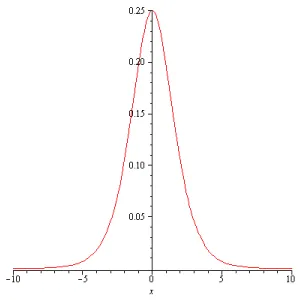
Figure 2.1: Graphic of the sigmoid *(1-sigmoid) input output function.
In this case:
T21 = 8 for maintain the rosehip cell threshold potential constant during 0.001[s] (the inhibition process of threshold voltage -0.055[V], spike voltage 0.01[V], hyperpolarization voltage -0.077[V] of the first pyramidal neuron cell).
For shift the threshold voltage of -0.055[V] of the of the first pyramidal neuron into the rest voltage of -0.075[V] it is assumed that at the start of the ‘dialog process’ the pyramidal neuron is in the threshold voltage of -0.055[V] and the rosehip neuron is in the threshold voltage state of -0.055[V] and the transfer coefficient T21 is taken (randomly) T21 = 8. This choice permit the transformation of the determination of T12 in a boundary value problem for the equation (1.1). In the obtained boundary boundary value problem T12 is a numerical parameter. This parameter has to be found such that the rest voltage of -0.075[V] of the pyramidal (first) neuron is achieved with an accuracy of 10-2. The main numerical families deployed to solve these problems include Shooting Methods, Finite Difference Methods, and Collocation Methods. By using shooting method in this case the value T21 = 76.5 was obtained.These results are represented in the next Figures (Figures 2.2-4):
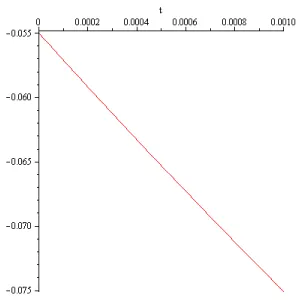
Figure 2.2: The pyramidal(first) neuron dynamic in case T12= -76.5, T21=8, t=0.001[s], x(0)=−0.055, w(0)=−0.055.
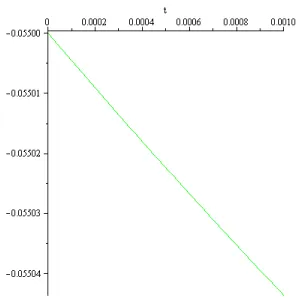
Figure 2.3: The rosehip neuron dynamic in case T12= -76.5, T21=8, t=0.001[s], x(0)=−0.055, w(0)=−0.055.
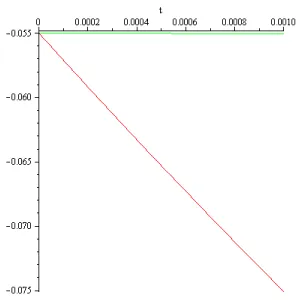
Figure 2.4: The pyramidal neuron (red) and the rosehip neuron(green) dynamic in case T12= -76.5, T21= 8, t = 0.001[s], x(0)=−0.055, w(0)=−0.055.
For shift the spike voltage of 0.01[V] of the of the pyramidal neuron into the rest voltage of -0.075[V] it is assumed that at the start of the ‘dialog process’ the pyramidal neuron is in the spike voltage of 0.01[V] and the rosehip neuron is in the threshold voltage state of -0.055[V] and the transfer coefficient T21 is taken (randomly) T21 = 8. This choice permit the transformation of the determination of T12 in a boundary value problem for the equation (1.1). In the obtained boundary value problem T12 is a numerical parameter. This parameter has to be found such that the rest voltage of -0.075[V] of the pyramidal (first) neuron is achieved with an accuracy of 10-2. The main numerical families deployed to solve these problems include Shooting Methods, Finite Difference Methods, and Collocation Methods. By using shooting method in this case the value T12 = -323.5 was obtained.These results are represented in the next Figures 2.5-7:
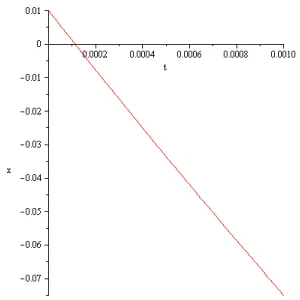
Figure 2.5: The pyramidal(first) neuron dynamic in case T12= -323.5, T12 = 8, t = 0.001[s], x(0)=−0.055, w(0)=−0.055.
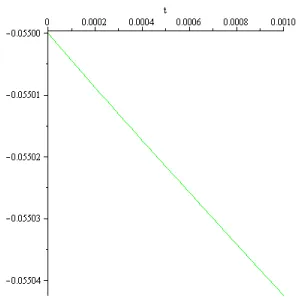
Figure 2.6: The rosehip neuron dynamic in case T12= -323.5, T21_= 8, t = 0.001[s], x(0)=−0.01, w(0)=−0.055.
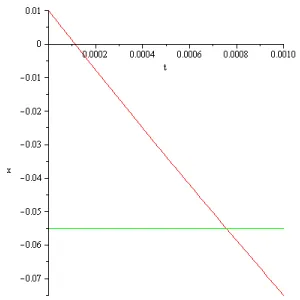
Figure 2.7: The pyramidal neuron (red) and the rosehip neuron(green) dynamic in case T12= -323.5, T21=8, t=0.001[s], x(0)=−0.01, w(0)=−0.055
For shift the hyperpolarization voltage of -0.077[V] of the of the pyramidal neuron into the rest voltage of -0.075[V] it is assumed that at the start of the ‘dialog process’ the pyramidal neuron is in the hyperpolarization voltage of -0.077[V] and the rosehip neuron is in the threshold voltage state of -0.055[V], and the transfer coefficient T21 is taken (randomly) T21 = 8. This choice permit the transformation of the determination of T12 in a boundary value problem for the equation (1.1). In the obtained boundary value problem T12 is a numerical parameter. This parameter has to be found such that the rest voltage of -0.075[V] of the pyramidal(first) neuron is achieved with an accuracy of 10-2. The main numerical families deployed to solve these problems include Shooting Methods, Finite Difference Methods, and Collocation Methods. By using shooting method in this case the value T12 = 7.5 was obtained.These results are represented in the next Figures 2.8-10:
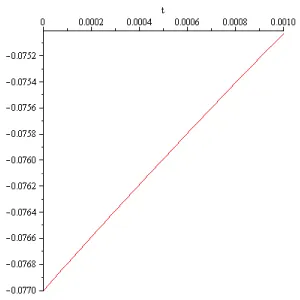
Figure 2.8: The pyramidal(first) neuron dynamic in case T12=7.5, T21=8, t=0.001[s], x(0)=−0.077, w(0)=−0.055.
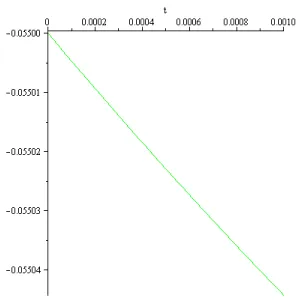
Figure 2.9: The rosehip neuron dynamic in case T12=7.5, T21=8, t=0.001[s], x(0)=−0.077, w(0)=−0.055.
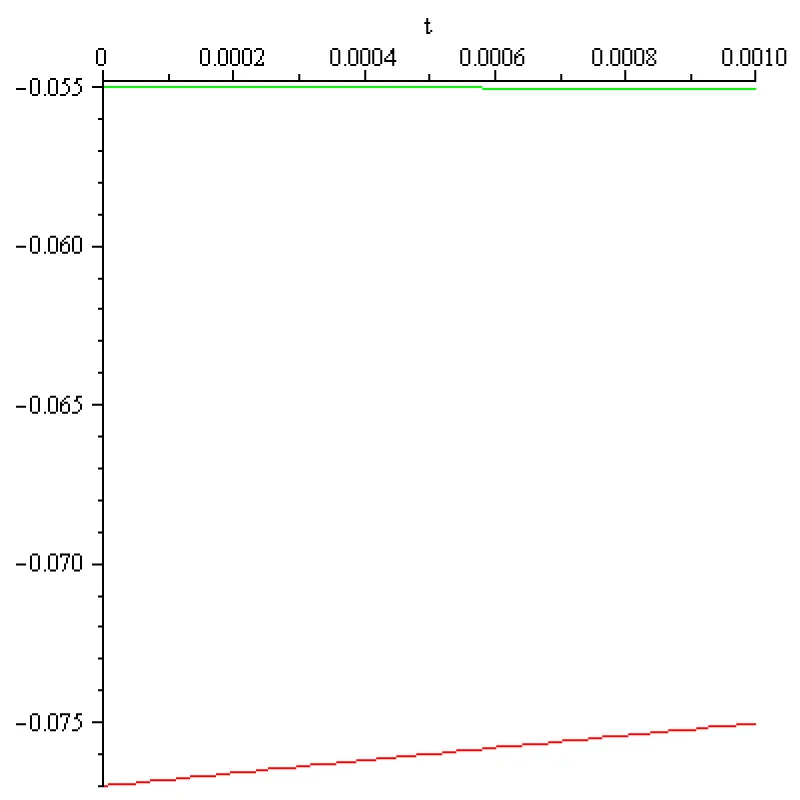
Figure 2.10: The pyramidal neuron (red) and the rosehip neuron(green) dynamic in case T12= 7.5, T21=8, t=0.001[s], x(0)=−0.077, w(0)=−0.055.
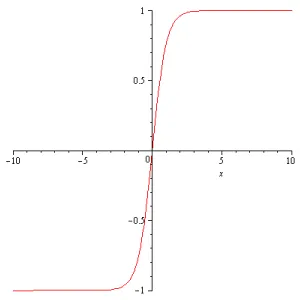
Figure 3.1: The graphic of the ‘Tanh’ input output function.
In this case:
, , T21 = 0.5 for maintain the rosehip cell threshold potential constant during 0.001[s] (the inhibition process of threshold voltage -0.055[V], spike voltage 0.01[V], hyperpolarization voltage -0.077[V] of the first pyramidal neuron cell).
For shift the threshold voltage of -0.055[V] of the of the first pyramidal neuron into the rest voltage of -0.075[V] it is assumed that at the start of the ‘dialog process’ the pyramidal neuron is in the threshold voltage of -0.055[V] and the rosehip neuron is in the threshold voltage state of -0.055[V] and the transfer coefficient T21 is taken (randomly) T21 = 0.5.
This choice permit the transformation of the determination of T12 in a boundary value problem for the equation (1.1). In the obtained boundary value problem T12 is a numerical parameter. This parameter has to be found such that the rest voltage of -0.075[V] of the pyramidal(first) neuron is achieved with an accuracy of 10-2. The main numerical families deployed to solve these problems include Shooting Methods, Finite Difference Methods, and Collocation Methods. By using shooting method in this case the value T12 = 365 was obtained. These results are represented in the next Figures 3.2-4:
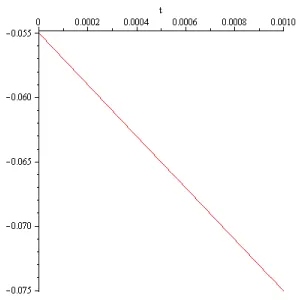
Figure 3.2: The pyramidal(first) neuron dynamic in case T12= 365, T21=0.5, t=0.001[s], x(0)=−0.055, w(0)=−0.055.
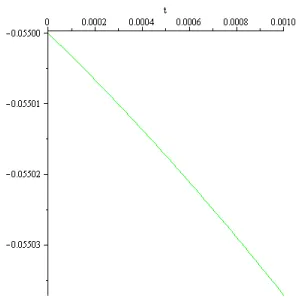
Figure 3.3: The rosehip neuron dynamic in case T12= 365, T21=0.5, t=0.001[s], x(0)=−0.055, w(0)=−0.055.
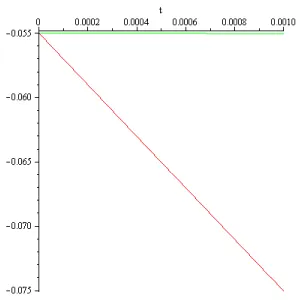
Figure 3.4: The pyramidal neuron (red) and the rosehip neuron(green) dynamic in case T12= 365, T21=0.5, t=0.001[s], x(0)=−0.055, w(0)=−0.055.
For shift the spike voltage of 0.01[V] of the of the first pyramidal neuron into the rest voltage of -0.075[V] it is assumed that at the start of the ‘dialog process’ the pyramidal neuron is in the spike voltage of 0.01[V] and the rosehip neuron is in the threshold voltage state of -0.055[V] and the transfer coefficient T21 is taken (randomly) T21 = 0.5. This choice permit the transformation of the determination of T12 in a boundary value problem for the equation (1.1). In the obtained boundary value problem T12 is a numerical parameter. This parameter has to be found such that the rest voltage of -0.075[V] of the pyramidal (first) neuron is achieved with an accuracy of 10-2. The main numerical families deployed to solve these problems include Shooting Methods, Finite Difference Methods, and Collocation Methods. By using shooting method in this case the value T12 = 1548 was obtained. These results are represented in the next Figures 3.5-7:
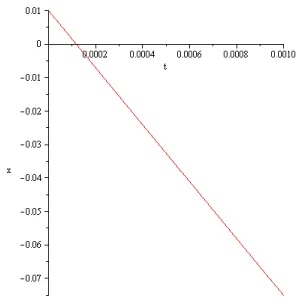
Figure 3.5: The pyramidal neuron dynamic in case T12= 1548, T21=0.5, t=0.001[s], x(0)=0.01, w(0)=−0.055.
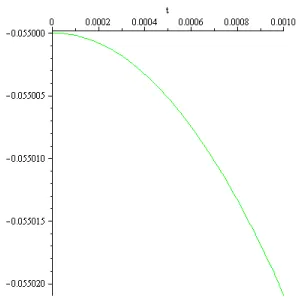
Figure 3.6: The rosehip neuron dynamic in case T12= 1548, T21=0.5, t=0.001[s], x(0)=0.01, w(0)=−0.055.
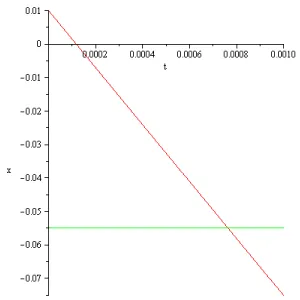
Figure 3.7: The pyramidal neuron (red) and the rosehip neuron(green) dynamic in case T12= 1548, T21=0.5, t=0.001[s], x(0)=0.01, w(0)=−0.055.
For shift the hyperpolarization voltage of -0.077[V] of the of the first pyramidal neuron into the rest voltage of -0.075[V] it is assumed that at the start of the ‘dialog process’ the pyramidal neuron is in the hyperpolarization voltage of -0.077[V] and the rosehip neuron is in the threshold voltage state of -0.055[V] and the transfer coefficient T21 is taken (randomly) T21 = 0.5. This choice permit the transformation of the determination of T21 in a boundary value problem for the equation (1.1). In the obtained boundary value problem T21 is a numerical parameter. This parameter has to be found such that the rest voltage of -0.075[V] of the pyramidal (first) neuron is achieved with an accuracy of 10-2. The main numerical families deployed to solve these problems include Shooting Methods, Finite Difference Methods, and Collocation Methods. By using shooting method in this case the value T12 = -35.5 was obtained. These results are represented in the next Figures 3.8-10:
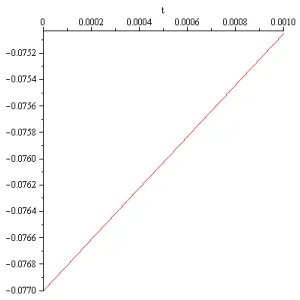
Figure 3.8: The pyramidal neuron dynamic in case T12= -35.5, T21=0.5, t=0.001[s], x(0)=−0.077, w(0)=−0.055.
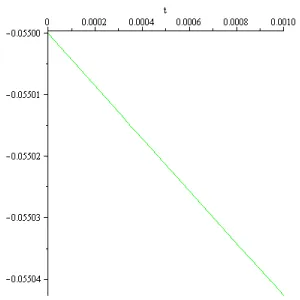
Figure 3.9: The rosehip neuron dynamic in case T12= -35.5, T21=0.5, t=0.001[s], x(0)=−0.077, w(0)=−0.055.
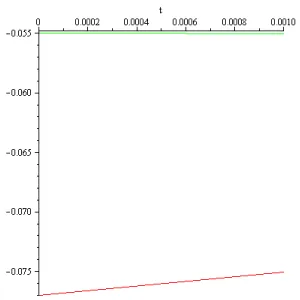
Figure 3.10: The pyramidal neuron (red) and the rosehip neuron(green) dynamic in case T12= -35.5, T21=0.5, t=0.001[s], x(0)=−0.077, w(0)=−0.055.
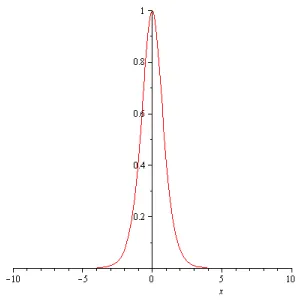
Figure 4.1: The graphic of the ‘Tanh-derivative’ input output function.
In this case:
, , T21 = 2, for maintain the rosehip cell threshold potential constant during 0.001[s] (the inhibition process of threshold voltage -0.055[V], spike voltage 0.01[V], hyperpolarization voltage -0.077[V] of the first pyramidal neuron cell).
For shift the threshold voltage of -0.055[V] of the of the pyramidal neuron into the rest voltage of -0.075[V] it is assumed that at the start of the ‘dialog process’ the pyramidal neuron is in the threshold voltage of -0.055[V] and the rosehip neuron is in the threshold voltage state of -0.055[V] and the transfer coefficient T21 is taken (randomly) T21 = 2. This choice permit the transformation of the determination of T21 in a boundary value problem for the equation (1.1). In the obtained boundary value problem T21 is a numerical parameter. This parameter has to be found such that the rest voltage of -0.075[V] of the pyramidal (first) neuron is achieved with an accuracy of 10-2. The main numerical families deployed to solve these problems include Shooting Methods, Finite Difference Methods, and Collocation Methods. By using shooting method in this case the value was obtained. These results are represented in the next Figures 4.2-4:
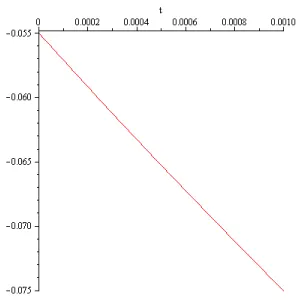
Figure 4.2: The pyramidal neuron dynamic in case T12=−19.1, T21=2, t=0.001[s], x(0)=−0.055, w(0)=−0.055.
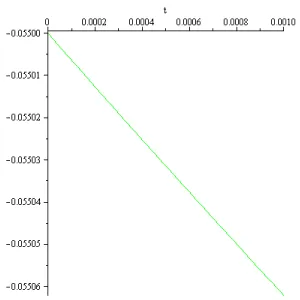
Figure 4.3: The rosehip neuron dynamic in case T12=−19.1, T21=2, t=0.001[s], x(0)=−0.055, w(0)=−0.055.
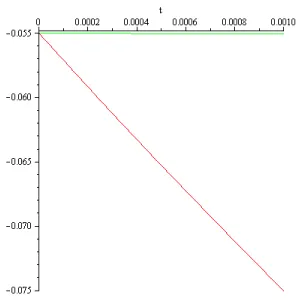
Figure 4.4: The rosehip neuron dynamic in case 𝑇12=−19.1, 𝑇21=2, t=0.001[s], 𝑥(0)=−0.055, 𝑤(0)=−0.055.
For shift the spike voltage of 0.01[V] of the of the pyramidal neuron into the rest voltage of -0.075[V] it is assumed that at the start of the ‘dialog process’ the pyramidal neuron is in the spike voltage of 0.01[V] and the rosehip neuron is in the threshold voltage state of -0.055[V] i.e. and the transfer coefficient T21 is taken (randomly) T21 = 2. This choice permit the transformation of the determination of T21 in a boundary value problem for the equation (1.1). In the obtained boundary value problem T21 is a numerical parameter. This parameter has to be found such that the rest voltage of -0.075[V] of the pyramidal (first) neuron is achieved with an accuracy of 10-2. The main numerical families deployed to solve these problems include Shooting Methods, Finite Difference Methods, and Collocation Methods. By using shooting method in this case the value T12 = 81.1 was obtained. These results are represented in the next Figures 4.5-7:
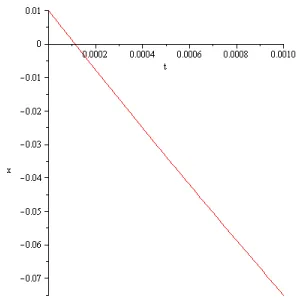
Figure 4.5: The pyramidal neuron dynamic in case 𝑇12=−81.1, 𝑇21=2, t=0.001[s], 𝑥(0)=0.01, 𝑤(0)=−0.055.
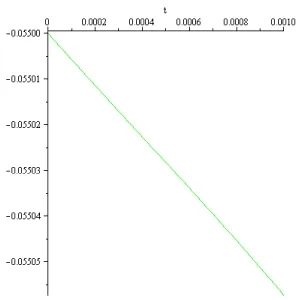
Figure 4.6: The rosehip neuron dynamic in case 𝑇12=−81.1, 𝑇21=2, t=0.001[s], 𝑥(0)=0.01, 𝑤(0)=−0.055.
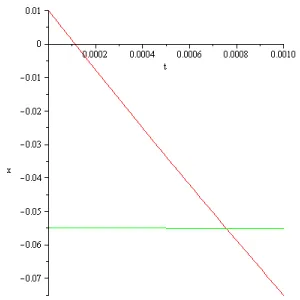
Figure 4.7: The pyramidal (red) and the rosehip (green) neuron dynamic in case 𝑇12=−81.1, 𝑇21=2, t=0.001[s], 𝑥(0)=0.01, 𝑤(0)=−0.055.
For shift the hyperpolarization voltage of -0.077[V] of the of the pyramidal neuron into the rest voltage of -0.075[V] it is assumed that at the start of the ‘dialog process’ the pyramidal neuron is in the hyperpolarization voltage of -0.077[V] and the rosehip neuron is in the threshold voltage state of -0.055[V] i.e. and the transfer coefficient T21 is taken (randomly) T21 = 2. This choice permit the transformation of the determination of T21 in a boundary value problem for the equation (1.1). In the obtained boundary value problem T21 is a numerical parameter. This parameter has to be found such that the rest voltage of -0.075[V] of the pyramidal (first) neuron is achieved with an accuracy of 10-2. The main numerical families deployed to solve these problems include Shooting Methods, Finite Difference Methods, and Collocation Methods. By using shooting method in this case the value T12 = 1.9 was obtained. These results are represented in the next Figures 4.8-10:
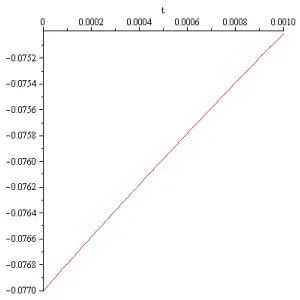
Figure 4.8: The pyramidal neuron dynamic in case 𝑇12=1.9, 𝑇21=2, t=0.001[s], 𝑥(0)=−0.077, 𝑤(0)=−0.055.
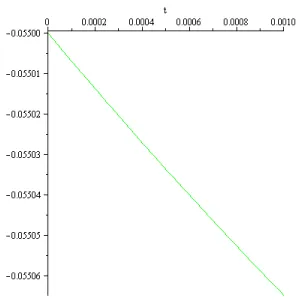
Figure 4.9: The rosehip neuron dynamic in case 𝑇12=1.9, 𝑇21=2, t=0.001[s], 𝑥(0)=−0.077, 𝑤(0)=−0.055.
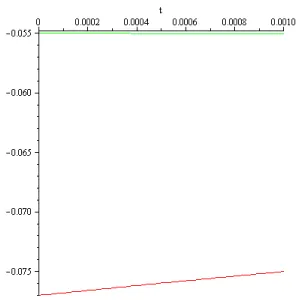
Figure 4.10: The pyramidal (red) and the rosehip (green) neuron dynamic in case 𝑇12=1.9, 𝑇21=2, t=0.001[s], 𝑥(0)=−0.077, 𝑤(0)=−0.055.
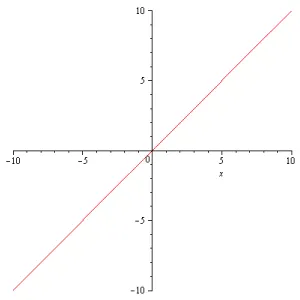
Figure 5.1: The graphic of the ‘Linear’ input output function.
In this case:
, , T21 = 1, for maintain the rosehip cell threshold potential constant during 0.001[s] ,timeframe of the inhibition process of threshold voltage -0.055[V], spike voltage 0.01[V], hyperpolarization voltage -0.077[V] of the pyramidal neuron cell.
For shift the threshold voltage of -0.055[V] of the of the pyramidal neuron into the rest voltage of -0.075[V] it is assumed that at the start of the ‘dialog process’ the pyramidal neuron is in the threshold voltage of -0.055[V] and the rosehip neuron is also in the threshold voltage state of -0.055[V], i.e. x(0) =- 0.055, w(0) =- 0.055, and the transfer coefficient T21 is taken (randomly)
T12 = 1. This choice permit the transformation of the determination of T21 in a boundary value problem for the equation (1.1). In the obtained boundary value problem T21 is a numerical parameter. This parameter has to be found such that the rest voltage of -0.075[V] of the pyramidal (first) neuron is achieved with an accuracy of 10-2. The main numerical families deployed to solve these problems include Shooting Methods, Finite Difference Methods, and Collocation Methods. By using shooting method in this case the value T12 = 365 was obtained. These results are represented in the next Figures 5.2-4:
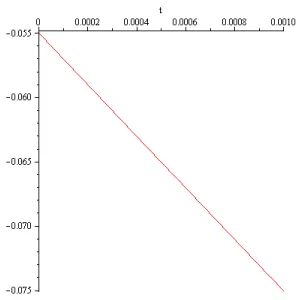
Figure 5.2: The pyramidal neuron dynamic in case T12=365, T21=1, t=0.001[s], x(0)=−0.055, w(0)=−0.055.
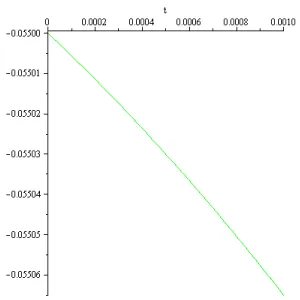
Figure 5.3: The pyramidal neuron dynamic in case T12=365, T21=1, t=0.001[s], x(0)=−0.055, w(0)=−0.055.
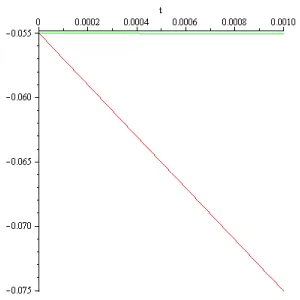
Figure 5.4: The pyramidal (red) and rosehip (green) neuron dynamic in case 𝑇12=365, 𝑇21=1, t=0.001[s], 𝑥(0)=−0.055, 𝑤(0)=−0.055.
For shift the spike voltage of 0.01[V] of the of the pyramidal neuron into the rest voltage of -0.075[V] it is assumed that at the start of the ‘dialog process’ the pyramidal neuron is in the spike voltage of 0.01[V] and the rosehip neuron is in the threshold voltage state of -0.055[V] i.e. x(0) =- 0.001, w(0) =- 0.055, and the transfer coefficient T21 is taken (randomly) T21 = 1. This choice permit the transformation of the determination of T21 in a boundary value problem for the equation (1.1). In the obtained boundary value problem T21 is a numerical parameter. This parameter has to be found such that the rest voltage of -0.075[V] of the pyramidal (first) neuron is achieved with an accuracy of 10-2. The main numerical families deployed to solve these problems include Shooting Methods, Finite Difference Methods, and Collocation Methods. By using shooting method in this case the value T12 = 1547 was obtained. These results are represented in the next Figures 5.5-7:
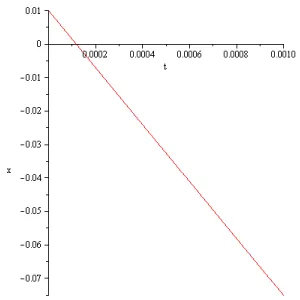
Figure 5.5: The pyramidal neuron dynamic in case 𝑇12=1547, 𝑇21=1, t=0.001[s], 𝑥(0)=0.01, 𝑤(0)=−0.055.
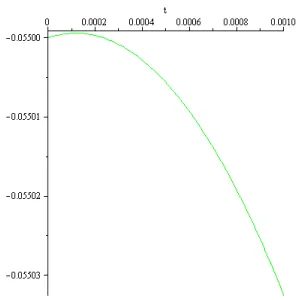
Figure 5.6: The rosehip neuron dynamic in case 𝑇12=1547, 𝑇21=1, t=0.001[s], 𝑥(0)=0.01, 𝑤(0)=−0.055.
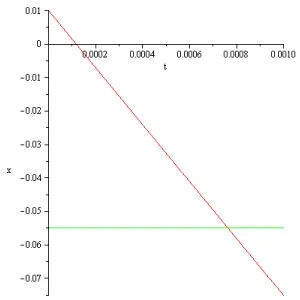
Figure 5.7: The pyramidal (red) and rosehip (green) neuron dynamic in case 𝑇12=1547, 𝑇21=1, t=0.001[s], 𝑥(0)=0.01, 𝑤(0)=−0.055.
For shift the hyperpolarization voltage of -0.077[V] of the of the pyramidal neuron into the rest voltage of -0.075[V] it is assumed that at the start of the ‘dialog process’ the pyramidal neuron is in the hyperpolarization voltage of -0.077[V] and the rosehip neuron is in the threshold voltage state of -0.055[V] i.e. x(0) =- 0.077, w(0) =- 0.055, and the transfer coefficient T21 is taken (randomly) T21 = 1. This choice permit the transformation of the determination of T21 in a boundary value problem for the equation (1.1). In the obtained boundary value problem T21 is a numerical parameter. This parameter has to be found such that the rest voltage of -0.075[V] of the pyramidal (first) neuron is achieved with an accuracy of 10-2. The main numerical families deployed to solve these problems include Shooting Methods, Finite Difference Methods, and Collocation Methods. By using shooting method in this case the value T12 = -20 was obtained. These results are represented in the next Figures 5.8-10:
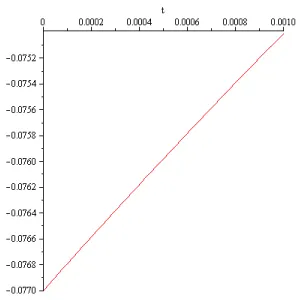
Figure 5.8: The pyramidal neuron dynamic in case 𝑇12=−20, 𝑇21=1, t=0.001[s], 𝑥(0)=−0.077, 𝑤(0)=−0.055.
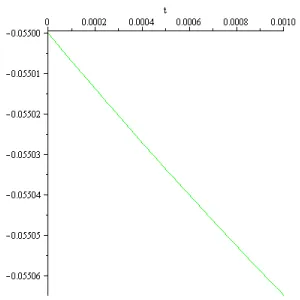
Figure 5.9: The rosehip neuron dynamic in case 𝑇12=−20, 𝑇21=1, t=0.001[s], 𝑥(0)=0.01, 𝑤(0)=−0.055.
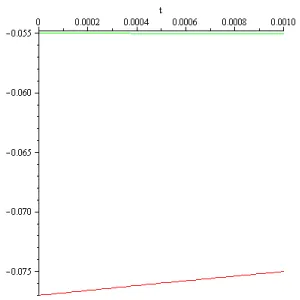
Figure 5.10: The pyramidal (red) and rosehip (green) neuron dynamic in case 𝑇12=−20, 𝑇21=1, t=0.001[s], 𝑥(0)=−0.077, 𝑤(0)=−0.055.
6. Inhibition in case of the ‘Leaky-Relu ’ input-output function g(x) = max(0.1 ×, x, x) (Figure 6.1)
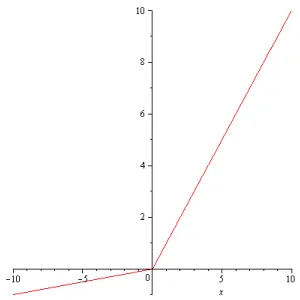
Figure 6.1: The graphic of the ‘Leaky-Relu’ input output function.
In this case:
, , T21 = 825, for maintain the rosehip cell potential constant during 0.001[s], timeframe of the inhibition process of threshold voltage -0.055[V], spike voltage 0.01[V], hyperpolarization voltage -0.077[V] of the pyramidal neuron cell.
For shift the threshold voltage of -0.055[V] of the of the pyramidal neuron into the rest voltage of -0.075[V] it is assumed that at the start of the ‘dialog process’ the pyramidal neuron is in the threshold voltage of -0.055[V] and the rosehip neuron is also in the threshold voltage state of -0.055[V], i.e. x(0) =- 0.055, w(0) =- 0.05 and the transfer coefficient T21 is taken (randomly) T21 = 825. This choice permit the transformation of the determination of T21 in a boundary value problem for the equation (1.1). In the obtained boundary value problem T21 is a numerical parameter. This parameter has to be found such that the rest voltage of -0.075[V] of the pyramidal(first) neuron is achieved with an accuracy of 10-2. The main numerical families deployed to solve these problems include Shooting Methods, Finite Difference Methods, and Collocation Methods. By using shooting method in this case the value T12 = 560 was obtained. These results are represented in the next Figures 6.2-4:
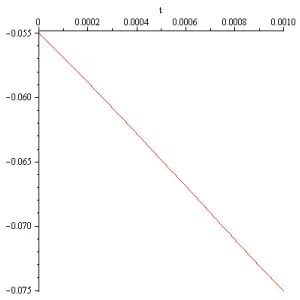
Figure 6.2: The pyramidal neuron dynamic in case 𝑇12=−560, 𝑇21=−825, t=0.001[s], 𝑥(0)=−0.055, 𝑤(0)=−0.055.
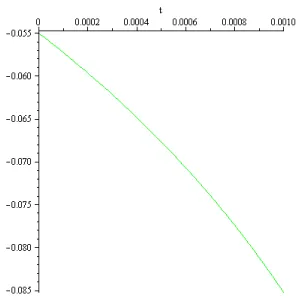
Figure 6.3: The rosehip neuron dynamic in case 𝑇12=−560, 𝑇21=−825, t=0.001[s], 𝑥(0)=−0.055, 𝑤(0)=−0.055.
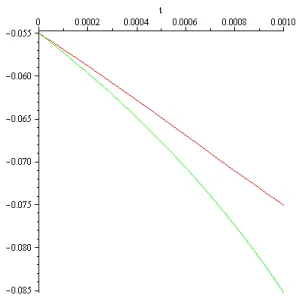
Figure 6.4: The pyramidal (red) and the rosehip (green) neuron dynamic in case 𝑇12=−560, 𝑇21=−825, t=0.001[s], 𝑥(0)=−0.055, 𝑤(0)=−0.055.
For shift the spike voltage of 0.01[V] of the of the pyramidal neuron into the rest voltage of -0.075[V] it is assumed that at the start of the ‘dialog process’ the pyramidal neuron is in the spike voltage of 0.01[V] and the rosehip neuron is in the threshold voltage state of -0.055[V] i.e. x(0) =- 0.001, w(0) =- 0.055, and the transfer coefficient T21 is taken (randomly) T21 = 825. This choice permit the transformation of the determination of T21 in a boundary value problem for the equation (1.1). In the obtained boundary value problem T21 is a numerical parameter. This parameter has to be found such that the rest voltage of -0.075[V] of the pyramidal (first) neuron is achieved with an accuracy of 10-2. The main numerical families deployed to solve these problems include Shooting Methods, Finite Difference Methods, and Collocation Methods. By using shooting method in this case the value T12 = 634.5 was obtained. These results are represented in the next Figures 6.5-7:
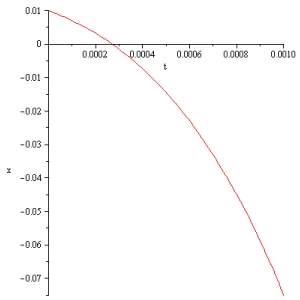
Figure 6.5: The pyramidal neuron dynamic in case 𝑇12=634.5, 𝑇21=−825, t=0.001[s], 𝑥(0)=0.01, 𝑤(0)=−0.055.
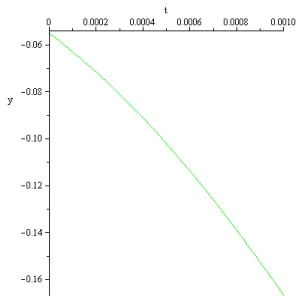
Figure 6.6: The rosehip neuron dynamic in case 𝑇12=634.5, 𝑇21=−825, t=0.001[s], 𝑥(0)=0.01,w(0)=−0.055.
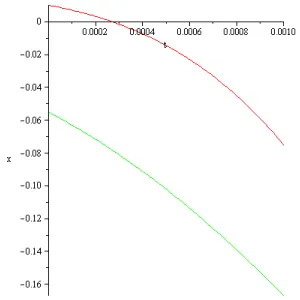
Figure 6.7: The pyramidal(red) and the rosehip (green) neuron dynamic in case 𝑇12=634.5, 𝑇21=−825, t=0.001[s], 𝑥(0)=0.01,w(0)=−0.055.
For shift the hyperpolarization voltage of -0.077[V] of the of the pyramidal neuron into the rest voltage of -0.075[V] it is assumed that at the start of the ‘dialog process’ the pyramidal neuron is in the hyperpolarization voltage of -0.077[V] and the rosehip neuron is in the threshold voltage state of -0.055[V] i.e. x(0) =- 0.077, w(0) =- 0.055, and the transfer coefficient T21 is taken (randomly) T21 = 825. This choice permit the transformation of the determination of T21 in a boundary value problem for the equation (1.1). In the obtained boundary value problem T21 is a numerical parameter. This parameter has to be found such that the rest voltage of -0.075[V] of the pyramidal (first) neuron is achieved with an accuracy of 10-2. The main numerical families deployed to solve these problems include Shooting Methods, Finite Difference Methods, and Collocation Methods. By using shooting method in this case the value T12 = 1229 was obtained. These results are represented in the next Figures 6.8-10:
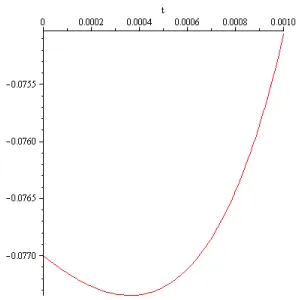
Figure 6.8: The pyramidal neuron dynamic in case 𝑇12=−1229, 𝑇21=−825, t=0.001[s], 𝑥(0)=−0.077, 𝑤(0)=−0.055.
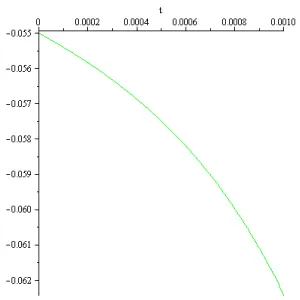
Figure 6.9: The rosehip neuron dynamic in case 𝑇12=−1229, 𝑇21=−825, t=0.001[s], 𝑥(0)=−0.077,w(0)=−0.055.
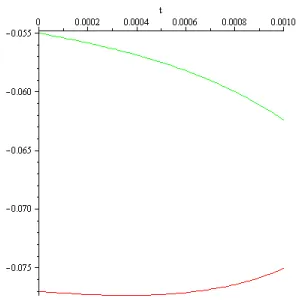
Figure 6.10: The pyramidal(red) and the rosehip (green) neuron dynamic in case 𝑇12=−1229, 𝑇21=−825, t=0.001[s], 𝑥(0)=−0.077,w(0)=−0.055.
Note that, in this section the computed rosehip neuron voltage at the end of the inhibition process, is in the hyperpolarization zone. This is due to the prior given transfer matrix coefficient value T12 = 825.
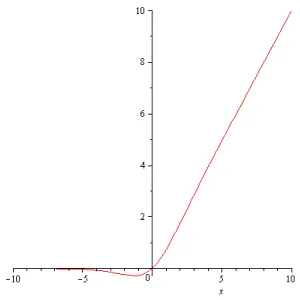
Figure 7.1: The graphic of the ‘Swish’ input output function.
In this case:
, , T21 = 300, for maintain the rosehip cell potential constant during 0.001[s] ,timeframe of the inhibition process of threshold voltage -0.055[V], spike voltage 0.01[V], hyperpolarization voltage -0.077[V] of the pyramidal neuron cell.
For shift the threshold voltage of -0.055[V] of the of the pyramidal neuron into the rest voltage of -0.075[V] it is assumed that at the start of the ‘dialog process’ the pyramidal neuron is in the threshold voltage of -0.055[V] and the rosehip neuron is also in the threshold voltage state of -0.055[V] ,i.e. x(0) =- 0.055, w(0) =- 0.055, and the transfer coefficient T21 is taken (randomly) T21 = 300. This choice permit the transformation of the determination of T21 in a boundary value problem for the equation (1.1). In the obtained boundary value problem T21 is a numerical parameter. This parameter has to be found such that the rest voltage of -0.075[V] of the pyramidal (first) neuron is achieved with an accuracy of 10-2. The main numerical families deployed to solve these problems include Shooting Methods, Finite Difference Methods, and Collocation Methods. By using shooting method in this case the value T12 = 756 was obtained. These results are represented in the next Figures 7.2-4:
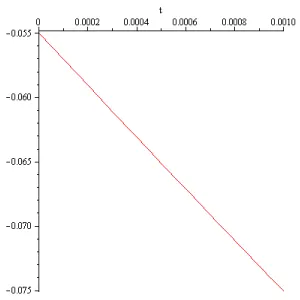
Figure 7.2: The pyramidal neuron dynamic in case 𝑇12=756, 𝑇21=−300, t=0.001[s], 𝑥(0)=−0.055, 𝑤(0)=−0.055.
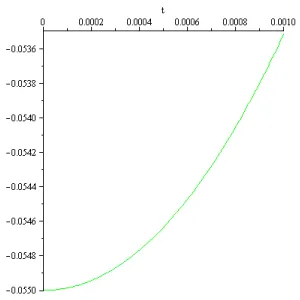
Figure 7.3: The rosehip neuron dynamic in case 𝑇12=756, 𝑇21=−300, t=0.001[s], 𝑥(0)=−0.055, 𝑤(0)=−0.055.
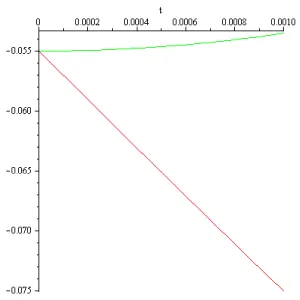
Figure 7.4: The pyramidal (red) and the rosehip (green) neuron dynamic in case 𝑇12=756, 𝑇21=−300, t=0.001[s], 𝑥(0)=−0.055, 𝑤(0)=−0.055.
For shift the spike voltage of 0.01[V] of the of the pyramidal neuron into the rest voltage of -0.075[V] it is assumed that at the start of the ‘dialog process’ the pyramidal neuron is in the spike voltage of 0.01[V] and the rosehip neuron is in the threshold voltage state of -0.055[V] i.e. x(0) =- 0.001, w(0) =- 0.055, and the transfer coefficient T21 is taken (randomly) T21 = 300. This choice permit the transformation of the determination of T21 in a boundary value problem for the equation (1.1). In the obtained boundary value problem T21 is a numerical parameter. This parameter has to be found such that the rest voltage of -0.075[V] of the pyramidal(first) neuron is achieved with an accuracy of 10-2. The main numerical families deployed to solve these problems include Shooting Methods, Finite Difference Methods, and Collocation Methods. By using shooting method in this case the value T12 = 3027 was obtained. These results are represented in the next Figures 7.5-7:
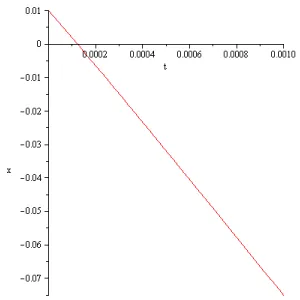
Figure 7.5: The pyramidal neuron dynamic in case 𝑇12=3027, 𝑇21=−300, t=0.001[s], 𝑥(0)=0.01, 𝑤(0)=−0.055.
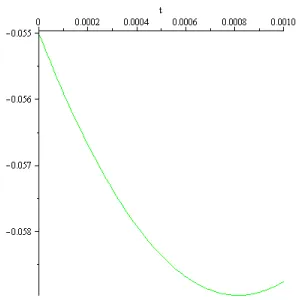
Figure 7.6: The rosehip neuron dynamic in case 𝑇12=3027, 𝑇21=−300, t=0.001[s], 𝑥(0)=0.01, 𝑤(0)=−0.055.
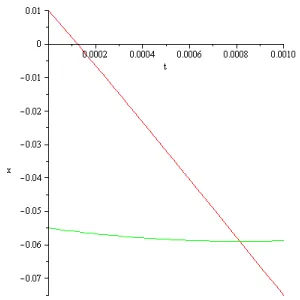
Figure 7.7: The pyramidal (red) and the rosehip (green) neuron dynamic in case 𝑇12=3027, 𝑇21=−300, t=0.001[s], 𝑥(0)=0.01, 𝑤(0)=−0.055.
For shift the hyperpolarization voltage of -0.077[V] of the of the pyramidal neuron into the rest voltage of -0.075[V] it is assumed that at the start of the ‘dialog process’ the pyramidal neuron is in the hyperpolarization voltage of -0.077[V] and the rosehip neuron is in the threshold voltage state of -0.055[V] i.e. x(0) =- 0.077, w(0) =- 0.055, and the transfer coefficient T21 is taken (randomly) T21 = 300. This choice permit the transformation of the determination of T21 in a boundary value problem for the equation (1.1). In the obtained boundary value problem T21 is a numerical parameter. This parameter has to be found such that the rest voltage of -0.075[V] of the pyramidal (first) neuron is achieved with an accuracy of 10-2. The main numerical families deployed to solve these problems include Shooting Methods, Finite Difference Methods, and Collocation Methods. By using shooting method in this case the value T12 = 75 was obtained. These results are represented in the next Figures 7.8-10:
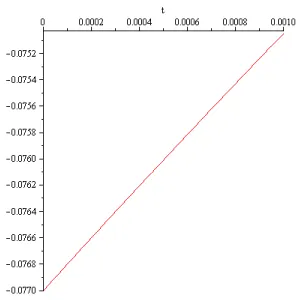
Figure 7.8: The pyramidal neuron dynamic in case 𝑇12=−75, 𝑇21=−300, t=0.001[s], 𝑥(0)=−0.077, 𝑤(0)=−0.055.
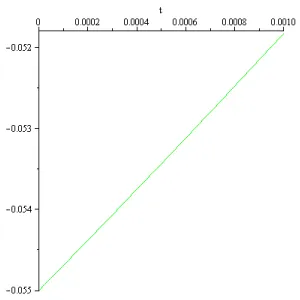
Figure 7.9: The rosehip neuron dynamic in case 𝑇12=−75, 𝑇21=−300, t=0.001[s], 𝑥(0)=−0.077, 𝑤(0)=−0.055.
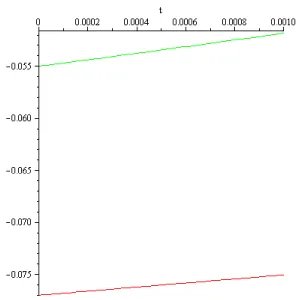
Figure 7.10: The pyramidal(red) and the rosehip(green) neuron dynamic in case 𝑇12=−75, 𝑇21=−300, t=0.001[s], 𝑥(0)=−0.077, 𝑤(0)=−0.055.
8. Inhibition in case of the ‘Elu’ input-output function g(x) = 1 × (ex - 1 ) for x ≤ 0 and g(x) = x for x ≥ 0.. (Figure 8.1)
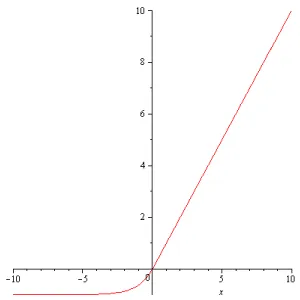
Figure 8.1: The graphic of the ‘ELU’ input output function.
In this case:
, , T21 = 300, for maintain the rosehip cell potential more than -0.055[V] during 0.001[s] ,timeframe of the inhibition process of threshold voltage -0.055[V], spike voltage 0.01[V], hyperpolarization voltage -0.077[V] of the pyramidal neuron cell.
For shift the threshold voltage of -0.055[V] of the of the pyramidal neuron into the rest voltage of -0.075[V] it is assumed that at the start of the ‘dialog process’ the pyramidal neuron is in the threshold voltage of -0.055[V] and the rosehip neuron is also in the threshold voltage state of -0.055[V], i.e. x(0) =- 0.055, w(0) =- 0.055 and the transfer coefficient T21 is taken (randomly) T21 = 300. This choice permit the transformation of the determination of T21 in a boundary value problem for the equation (1.1). In the obtained boundary value problem T21 is a numerical parameter. This parameter has to be found such that the rest voltage of -0.075[V] of the pyramidal (first) neuron is achieved with an accuracy of 10-2. The main numerical families deployed to solve these problems include Shooting Methods, Finite Difference Methods, and Collocation Methods. By using shooting method in this case the value T12 = 445.1 was obtained. These results are represented in the next Figures 8.2-4:
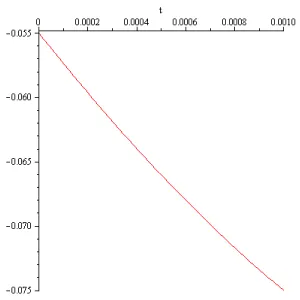
Figure 8.2: The pyramidal neuron dynamic in case 𝑇12=445.1, 𝑇21=−300, t=0.001[s], 𝑥(0)=−0.055, 𝑤(0)=−0.055.
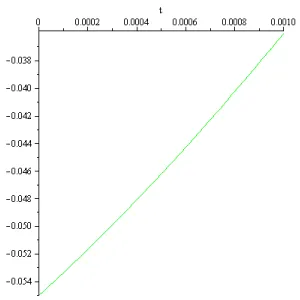
Figure 8.3: The rosehip neuron dynamic in case 𝑇12=445.1, 𝑇21=−300, t=0.001[s], 𝑥(0)=−0.055, 𝑤(0)=−0.055.
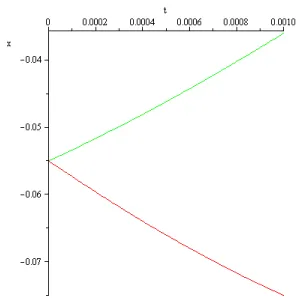
Figure 8.4: The pyramidal (red) and the rosehip (green) neuron dynamic in case 𝑇12=445.1, 𝑇21=−300, t=0.001[s], 𝑥(0)=−0.055, 𝑤(0)=−0.055.
For shift the spike voltage of 0.01[V] of the of the pyramidal neuron into the rest voltage of -0.075[V] it is assumed that at the start of the ‘dialog process’ the pyramidal neuron is in the spike voltage of 0.01[V] and the rosehip neuron is in the threshold voltage state of -0.055[V] i.e. x (0) = 0.01, w(0) =- 0.055 and the transfer coefficient T21 is taken (randomly) T21 = 300. This choice permit the transformation of the determination of T21 in a boundary value problem for the equation (1.1). In the obtained boundary value problem T21 is a numerical parameter. This parameter has to be found such that the rest voltage of -0.075[V] of the pyramidal (first) neuron is achieved with an accuracy of 10-2. The main numerical families deployed to solve these problems include Shooting Methods, Finite Difference Methods, and Collocation Methods. By using shooting method in this case the value T12 = 1647 was obtained. These results are represented in the next Figures 8.5-7:
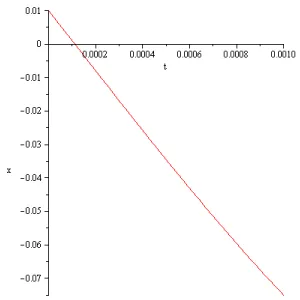
Figure 8.5: The pyramidal neuron dynamic in case 𝑇12=1674, 𝑇21=−300, t=0.001[s], 𝑥(0)=0.01, 𝑤(0)=−0.055.
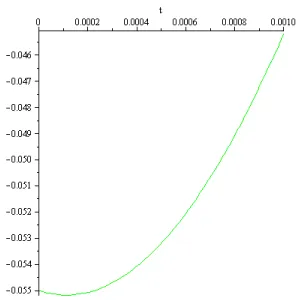
Figure 8.6: The rosehip neuron dynamic in case 𝑇12=1674, 𝑇21=−300, t=0.001[s], 𝑥(0)=0.01, 𝑤(0)=−0.055.
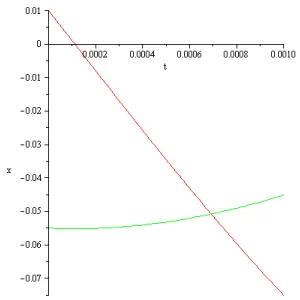
Figure 8.7: The pyramidal (red) and the rosehip (green) neuron dynamic in case 𝑇12=1674, 𝑇21=−300, t=0.001[s], 𝑥(0)=0.01, 𝑤(0)=−0.055.
For shift the hyperpolarization voltage of -0.077[V] of the of the pyramidal neuron into the rest voltage of -0.075[V] it is assumed that at the start of the ‘dialog process’ the pyramidal neuron is in the hyperpolarization voltage of -0.077[V] and the rosehip neuron is in the threshold voltage state of -0.055[V] i.e. x(0) = -0.077, w(0) =- 0.055, and the transfer coefficient T21 is taken (randomly) T21= -300. This choice permit the transformation of the determination of T21 in a boundary value problem for the equation (1.1). In the obtained boundary value problem T21 is a numerical parameter. This parameter has to be found such that the rest voltage of -0.075[V] of the pyramidal (first) neuron is achieved with an accuracy of 10-2. The main numerical families deployed to solve these problems include Shooting Methods, Finite Difference Methods, and Collocation Methods. By using shooting method in this case the value T21 =- 45.1. was obtained. These results are represented in the next Figures 8.8-10:
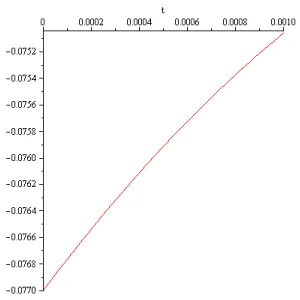
Figure 8.8: The pyramidal neuron dynamic in case 𝑇12=−45.1, 𝑇21=−300, t=0.001[s], 𝑥(0)=−0.077, 𝑤(0)=−0.055.
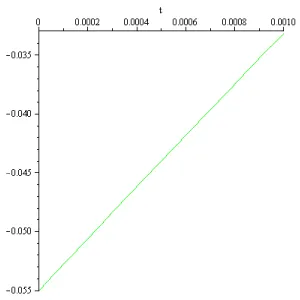
Figure 8.9: The rosehip neuron dynamic in case 𝑇12=−45.1, 𝑇21=−300, t=0.001[s], 𝑥(0)=−0.077, 𝑤(0)=−0.055.
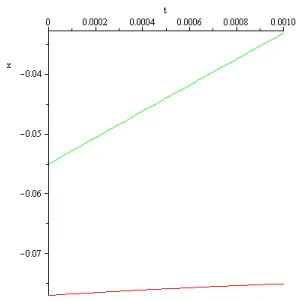
Figure 8.10: The pyramidal (red) and the rosehip (green) neuron dynamic in case 𝑇12=−45.1, 𝑇21=−300, t=0.001[s], 𝑥(0)=0.01, 𝑤(0)=−0.055.
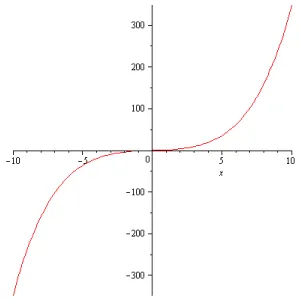
Figure 9.1: The graphic of the ‘GELU’ input output function.
In this case:
, , T21 = 300, for maintain the rosehip cell potential more than -0.055[V] during 0.001[s] ,timeframe of the inhibition process of threshold voltage -0.055[V], spike voltage 0.01[V], hyperpolarization voltage -0.077[V] of the pyramidal neuron cell.
For shift the threshold voltage of -0.055[V] of the of the pyramidal neuron into the rest voltage of -0.075[V] it is assumed that at the start of the ‘dialog process’ the pyramidal neuron is in the threshold voltage of -0.055[V] and the rosehip neuron is also in the threshold voltage state of -0.055[V], i.e. x(0) = -0.055, w(0) =- 0.055, and the transfer coefficient T21 is taken (randomly) T21 = -300. This choice permit the transformation of the determination of T21 in a boundary value problem for the equation (1.1). In the obtained boundary value problem T21 is a numerical parameter. This parameter has to be found such that the rest voltage of -0.075[V] of the pyramidal (first) neuron is achieved with an accuracy of 10-2. The main numerical families deployed to solve these problems include Shooting Methods, Finite Difference Methods, and Collocation Methods. By using shooting method in this case the value T12 =- 795 was obtained. These results are represented in the next Figures 9.2-4:
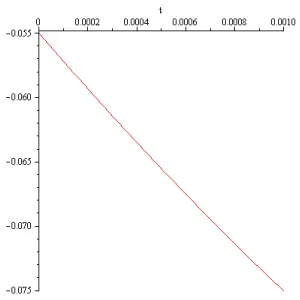
Figure 9.2: The pyramidal neuron dynamic in case 𝑇12=795, 𝑇21=−300, t=0.001[s], 𝑥(0)=−0.055, 𝑤(0)=−0.055.
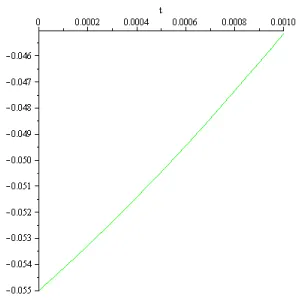
Figure 9.3: The rosehip neuron dynamic in case 𝑇12=795, 𝑇21=−300, t=0.001[s], 𝑥(0)=−0.055, 𝑤(0)=−0.055.
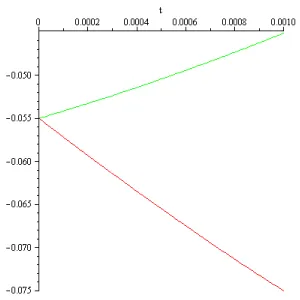
Figure 9.4: The pyramidal (red) and the rosehip (green) neuron dynamic in case 𝑇12=795, 𝑇21=−300, t=0.001[s], 𝑥(0)=−0.055, 𝑤(0)=−0.055.
For shift the spike voltage of 0.01[V] of the of the pyramidal neuron into the rest voltage of -0.075[V] it is assumed that at the start of the ‘dialog process’ the pyramidal neuron is in the spike voltage of 0.01[V] and the rosehip neuron is in the threshold voltage state of -0.055[V] i.e. x(0) = -0.001, w(0) =- 0.055, and the transfer coefficient T21 is taken (randomly) T21= -300. This choice permit the transformation of the determination of T21 in a boundary value problem for the equation (1.1). In the obtained boundary value problem T21 is a numerical parameter. This parameter has to be found such that the rest voltage of -0.075[V] of the pyramidal(first) neuron is achieved with an accuracy of 10-2. The main numerical families deployed to solve these problems include Shooting Methods, Finite Difference Methods, and Collocation Methods. By using shooting method in this case the value T21 = -3165 was obtained. These results are represented in the next Figures 9.5-7:
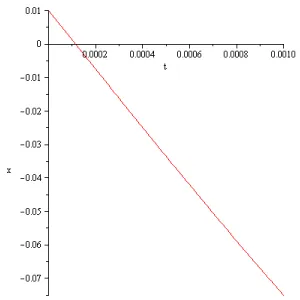
Figure 9.5: The pyramidal neuron dynamic in case 𝑇12=3165, 𝑇21=−300, t=0.001[s], 𝑥(0)=0.01, 𝑤(0)=−0.055.
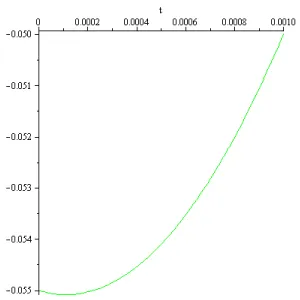
Figure 9.6: The rosehip neuron dynamic in case 𝑇12=3165, 𝑇21=−300, t=0.001[s], 𝑥(0)=0.01, 𝑤(0)=−0.055.
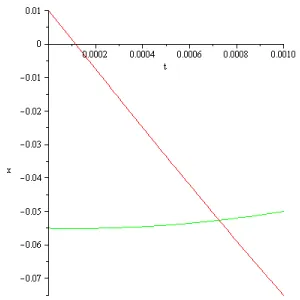
Figure 9.7: The pyramidal (red) and the rosehip (green) neuron dynamic in case 𝑇12=3165, 𝑇21=−300, t=0.001[s], 𝑥(0)=0.01, 𝑤(0)=−0.055.
For shift the hyperpolarization voltage of -0.077[V] of the of the pyramidal neuron into the rest voltage of -0.075[V] it is assumed that at the start of the ‘dialog process’ the pyramidal neuron is in the hyperpolarization voltage of -0.077[V] and the rosehip neuron is in the threshold voltage state of -0.055[V] i.e. x(0) = -0.077, w(0) =- 0.055, and the transfer coefficient T21 is taken (randomly) T21 = -300. This choice permit the transformation of the determination of T21 in a boundary value problem for the equation (1.1). In the obtained boundary value problem T21 is a numerical parameter. This parameter has to be found such that the rest voltage of -0.075[V] of the pyramidal (first) neuron is achieved with an accuracy of 10-2. The main numerical families deployed to solve these problems include Shooting Methods, Finite Difference Methods, and Collocation Methods. By using shooting method in this case the value T12 = -76 was obtained. These results are represented in the next Figures 9.8-10:
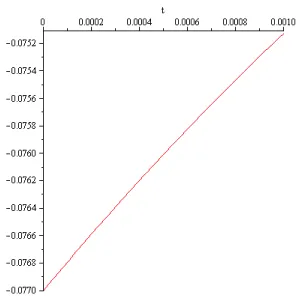
Figure 9.8: The pyramidal neuron dynamic in case 𝑇12=−76, 𝑇21=−300, t=0.001[s], 𝑥(0)=−0.077, 𝑤(0)=−0.055.
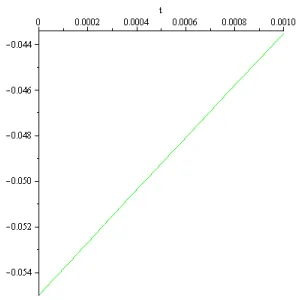
Figure 9.9: The rosehip neuron dynamic in case 𝑇12=−76, 𝑇21=−300, t=0.001[s], 𝑥(0)=−0.077, 𝑤(0)=−0.055.
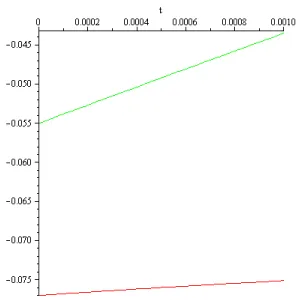
Figure 9.10: The pyramidal (red) and the rosehip (green) neuron dynamic in case 𝑇12=−76, 𝑇21=−300, t=0.001[s], 𝑥(0)=−0.077, 𝑤(0)=−0.055.
Computation show that the elements of the transfer matrix are highly dependent on the input-output function and on the voltage state of the pyramidal neuron which has to be inhibited. These dependences for several input –output functions are:
1. Sigmoid input-output function:
threshold voltage inhibition;
spike voltage inhibition;
hyperpol. voltage inhib. ;
2. Sigmoid*(1-Sigmoid) input-output function:
threshold voltage inhibition;
spike voltage inhibition;
hyperpol. voltage inhib.;
3. Tanh. input-output function:
threshold voltage inhibition;
spike voltage inhibition;
hyperpol. voltage inhib.;
4. Tanh-Derivative input-output function:
threshold voltage inhibition;
spike voltage inhibition;
hyperpol. voltage inhib.;
5. Linear input-output function:
threshold voltage inhibition;
spike voltage inhibition;
hyperpol. voltage inhib.;
6. Leaky-Relu input-output function:
threshold voltage inhibition;
spike voltage inhibition;
hyperpol. voltage inhib.;
7. Swish input-output function:
threshold voltage inhibition;
spike voltage inhibition;
hyperpol. voltage inhib.;
8. ELU input-output function:
threshold voltage inhibition;
spike voltage inhibition;
hyperpol. voltage inhib.;
9. GELU input-output function:
threshold voltage inhibition;
spike voltage inhibition;
hyperpol. voltage inhib.;
The use of artificial Hopfield neural network with self-connection is legitimated by the fact that the rest state x0 [V] and the time constant is different from zero in case of rosehip and pyramidal nervous cells.
It turns that the prior give of the elements T21 and T12 of the transfer matrix and the exclusive use of the constant external impulse current input in [1,2] leads to a necessary current amplitude which is higher as the amplitude reported in literature.
The presented computed transfer matrix coefficients are not unique.The element There exist other choices of coefficient T12 which leads to different values of T12 for a given input- output function.
Authors Contribution: The authors contributed equally to the realization of this work. All authors have read and agreed to the published version of the manuscript.
Founding: This research did not receive any specific grant from founding agencies in the public, commercial or not-for-profit sectors.
Data availability statement: The original contributions presented in the study are included in the article; further inquiries can be directed to the corresponding author.
Conflicts of interest: The authors declare no conflicts of interest.
- McRae M. Scientists have found a new type of brain cell and it looks like it's unique to humans. ScienceAlert [Internet]. 2018 [cited 2018 Sep 1]. Available from: https://www.sciencealert.com/rosehip-neuron-discovery-absent-in-mouse-models
- Boldog E, Bakken TE, Hodge RD, Novotny M, Aevermann BD, Baka J, et al. Transcriptomic and morphophysiological evidence for a specialized human cortical GABAergic cell type. Nat Neurosci. 2018 Sep;21(9):1185-95. Available from: https://doi.org/10.1038/s41593-018-0205-2
- Cojocaru AV, Balint S. Mirroring the pyramidal-neuron cell behavior in the continuous-time artificial Hopfield neural network: What problems arise? Int J Phys Res Appl. 2026;9(6):190-201. Available from: https://doi.org/10.29328/journal.ijpra.1001156
- Cojocaru AV, Balint S. Mirroring the rosehip-neuron cell behavior in the continuous-time artificial Hopfield neural network: What problems arise? Int J Phys Res Appl. 2026;9(6):162-89. Available from: https://doi.org/10.29328/journal.ijpra.1001155
- Cojocaru AV, Balint S. Mirroring the inhibition of a pyramidal neuron by a rosehip neuron in continuous-time artificial Hopfield neural network [preprint]. ResearchGate. 2026 Sep. Available from: https://doi.org/10.13140/RG.2.2.24383.06569